
Our Certificate
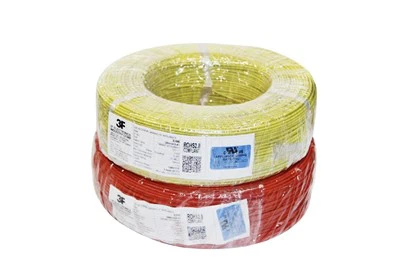
3F Electronics Industry Corp.Ltd passed the ISO9001 International Quality System certification in 2001,2009 in 2009 through TS16949 and QC080000 quality system, products obtain this CCC mandatory certification, American insurance laboratory UL certification.
Our Factory
3F Electronics Industry Corp.Ltd has insulation material plant, copper line processing plant, crossline irradiation plant.
Competitive price
We offer competitive prices and aim to provide our customers with affordable and cost-effective solutions.
Our service
The company is committed to training professional customer service personnel to provide customers with perfect products and multi-directional professional services.
What is Teflon Wire
Teflon wire, also known as high temperature cable, refers to the use of fluorine plastic insulation materials (FEP,PFA, PTFE) cable.Excellent corrosion resistance, almost insoluble in any organic solvent, oil resistance, strong acid, strong alkali resistance, strong oxidant, etc. Excellent electrical insulation performance, high voltage resistance, low loss at high frequency, no moisture absorption, large insulation resistance; Excellent fire resistance, aging resistance, long service life.
-
![UL1213]()
-
![UL1330]()
-
![UL1198 Fluoroplastic Electronic Wire]() UL1198 Fluoroplastic Electronic WireGood lubricity (small friction coefficient)view more
UL1198 Fluoroplastic Electronic WireGood lubricity (small friction coefficient)view more
Excellent resistance to radiation
Good resistance to twists
Has the very high resistivity
Good flame retardancy
In the process of wire processing good... -
![UL10126]()
-
![UL 10503]()
-
![UL10362 FPA High Temperature Teflon Wire]() UL10362 FPA High Temperature Teflon WireGood lubricity (small friction coefficient)view more
UL10362 FPA High Temperature Teflon WireGood lubricity (small friction coefficient)view more
Use half extrusion processing
Good resistance to twists
Nonhazardous
Good wire processing performanc
According to UL standard design -
![UL1517 ETFE Wire]() UL1517 ETFE WireProduction using semi extrusion processview more
UL1517 ETFE WireProduction using semi extrusion processview more
Low smoke
Can be processed into twisted pair or multi-core twisted wire
Suitable for water, fuel, oil, acid and alkali environment
Long-term ageing resistance
Excellent thermal... -
![UL3557 Computer And Commercial Machine Field Connection Wire]() UL3557 Computer And Commercial Machine Field Connection WireExcellent mechanical propertiesview more
UL3557 Computer And Commercial Machine Field Connection WireExcellent mechanical propertiesview more
Good flame retardancy
Excellent thermal aging properties
Good electrical insulation performance
Excellent low-temperature winding resistance
ROHS/REACH compliant
According to UL... -
![UL 1180 Teflon High Temperature Wire]() UL 1180 Teflon High Temperature WireUL1180 wire is a high temperature wire with high temperature resistance and chemical corrosion resistance.view more
UL 1180 Teflon High Temperature WireUL1180 wire is a high temperature wire with high temperature resistance and chemical corrosion resistance.view more -
![UL1815 PTFE insulated American Standard High-Temperature Resistant Wire]() UL1815 PTFE insulated American Standard High-Temperature ...Good mechanical propertiesview more
UL1815 PTFE insulated American Standard High-Temperature ...Good mechanical propertiesview more
Electrical insulation good
Good resistance to high temperature
Has the very high resistivity
Good flame retardancy
Use half extrusion processing
Good resistance to climate
In the... -
![UL1513 Single Core ETFE Wire]() UL1513 Single Core ETFE WireExcellent thermal stabilityview more
UL1513 Single Core ETFE WireExcellent thermal stabilityview more
Good mechanical properties
Long-term ageing resistance
High resistance to chemicals
Good flame retardancy
Electrical insulation good
ROHS/REACH compliant
According to UL standard... -
![UL10125 American Standard High-Temperature Electronic Wire]() UL10125 American Standard High-Temperature Electronic WireExcellent thermal stabilityview more
UL10125 American Standard High-Temperature Electronic WireExcellent thermal stabilityview more
Good mechanical properties
High resistance to chemicals
Good flame retardancy (VW-1)
Electrical insulation good
Good the dielectric properties
Using the Half extrusion...


Benefits of Teflon Wire
High temperature resistance
Teflon wire is known for its exceptional resistance to high temperatures, both low and high. It can withstand extreme heat up to 200°c without losing its electrical properties or degrading. This makes teflon wire ideal for applications that involve high-temperature environments, such as aerospace, automotive, and industrial settings.
Excellent chemical resistance
Another advantage of teflon wire is its exceptional resistance to various chemicals. Teflon is highly inert and non-reactive, making it unaffected by most common chemicals, oils, and solvents. This resistance to chemical corrosion ensures the longevity of the wire, making it suitable for environments where exposure to corrosive substances is expected.
Electrical insulation properties
Teflon is an excellent electrical insulator with a high dielectric strength. It provides good insulation against current leakage and prevents short circuits. Due to its low dielectric constant and high breakdown voltage, teflon wires can maintain stable electrical performance even in high-frequency applications, ensuring minimal signal loss and superior transmission quality.
Low friction and high flexibility
The low friction coefficient of teflon makes it easy to handle and install the wire in tight spaces. Its smooth surface also reduces wear and tear during bending and flexing, contributing to the wire's overall durability. The high flexibility of teflon wire allows it to be easily routed and installed in complex wiring configurations, saving time and effort during the installation process.
Moisture and weather resistance
Teflon wire exhibits excellent resistance to moisture, humidity, and weather conditions. It is not affected by water absorption, ensuring consistent performance even in wet environments. This resistance to moisture intrusion makes teflon wire suitable for outdoor applications and areas prone to moisture or condensation.
Types of Teflon Wire

PTFE
Polytetrafluoroethylene, is commonly used in applications requiring operating temperatures of up to 300 degrees Celsius.It also functions in settings with a small friction coefficient and requires materials with good wear resistance or chemical stability.PTFE has the best price-to-performance ratio with its no-stick properties and large temperature range to other polymers.It is seen in most high-temperature and high-frequency applications like telecommunications, radar, and medical device cable insulators.

ETFE
ETFE is a polymer made of only fluorine atoms, one of the strongest thermoplastic fluoropolymers that resist chemicals, moisture, and heat.This polymer works as an insulator or cable jacket, and its properties include a lower coefficient of friction, durability, and flame resistance.The EFTE properties make it ideal in environments with corrosion or high melting temperature.No amount of chemicals, electricity, or high-energy radiation can break down ETFE wired when used in environments with these risks.The material is prevalent in environments with high-temperature requirements, such as airplanes, automobiles, and factories with harsh environmental conditions.
FEP
This polymer, featuring almost identical to PTFE, is insulated against chemicals, moisture, and heat.It can only handle temperatures up to 200 degrees Celsius, and it melts and flows to form a non-porous film after compounding.If you compare it to polytetrafluoroethylene insulation, the FEP is much easier to work within an electric field, like airplanes, cars, and medical devices.At the same time, Most FEP materials don’t produce a toxic response when exposed to the body and are flexible, making them easy to reshape into intricate shapes.
Application of Teflon Wire
One of the biggest uses of Teflon wires involves oil and gas. The oil and gas industry is one of the largest in the world. This is because oil, as well as gas, is utilized as a core ingredient in hundreds of different business sectors globally. Hence, it is clear that if such an important industry uses Teflon wire, the wiring has tremendous value in the market. So the demand for this Teflon wire is very large. Among all of them, AWG 22 & AWG 18 Teflon wire are required regularly. There are lots of different operations within oil and gas companies, such as exploration, that can benefit from the use of Teflon wiring.
Thus, in addition to major industrial uses in the oil and gas sector, Teflon wire is also used in many different small businesses. Many people are surprised to hear that one of the biggest users of Teflon wires is the automotive sector. This is especially true when it comes to automotive repairs and construction. The durability of Teflon, as one may imagine, is perfect for environments such as the engine of a car. The engine of a car goes through a huge amount of heat pressure each time that it is used. Understandably, weak wires won't be able to resist the heat for an extended period of time, leading to it becoming deteriorated and ultimately causing malfunctions within the car.
What is The Difference Between Teflon Wire And PVC Wire

Insulation thickness is different
The teflon heating cable insulation is thinner than PVC electric cable insulation. But their insulation performance of them are both good, it is not that the thicker the insulation layer, the better the insulation performance.
Flammability performance is different
Teflon material has good flame retardancy, and it is not easy to ignite if it is directly burning with a lighter. And PVC material is easy to be ignited. This point is very easy to distinguish.
Degrees of preheating and melting is different
PVC material has poor high-temperature resistance, it will be easily melted when it encounters a high-temperature environment. But Teflon material is difficult to melt and has good heat resistance.
The appearance is different
From the appearance point of view, the sheath color brightness of these two cables is different. PVC insulated cable is dull, but Teflon cable is brighter.
The working temperature is different
Teflon high-temperature cable working temperature can reach 200℃, people also call it high-temperature cable since it's good high-temperature resistance. But PVC flexible cable working temperature can only reach 70℃. PVC cable is not very resistant to high temperatures.
Application is different
In the electronics industry, Teflon cable is usually used for temperature compensation wires, low-temperature resistant wires, high-temperature heating wires, aging resistant wires, and flame retardant wires; In the household appliance industry, Teflon heating cable is usually used for internal wiring of air conditioners, microwave ovens, electronic disinfection cabinets, rice cookers, electronic thermos bottles, electric heaters, electric ovens, electric frying pans, lamps, and lanterns, etc.

Conductor
Common conductor materials include metals such as copper and aluminum. Copper conductors are the most commonly used because copper has good electrical conductivity and mechanical strength.
Outer sheath
The outer sheath can be made of different materials, such as polyvinyl chloride (PVC), polyurethane (PU), polyethylene (PE), etc. When selecting outer sheath materials, factors such as wear resistance, corrosion resistance, and flexibility are usually considered.
How to Choose Teflon Wire
Certification standards: Ensure that Teflon wires comply with relevant international or local certification standards, such as UL, CE, CCC, etc. These certification standards prove the quality and safety of the product.
Manufacturer reputation: Choose a manufacturer or brand with a good reputation. They will usually pay more attention to product quality control and safety.
Material quality: The outer covering material of Teflon wire is polytetrafluoroethylene (PTFE). You should ensure that the selected product uses high-quality PTFE material to ensure high temperature resistance, corrosion resistance and insulation performance.
Rated voltage and current: According to actual needs, select the rated voltage and current of Teflon wire that meets the usage scenario. Make sure the chosen wires can handle the required voltage and current to avoid overloading and safety hazards.
Correct size and specification: Choose the appropriate Teflon wire size and specification according to your needs. Make sure the cross-sectional area and diameter of the wire are appropriate for the specific electrical application to ensure current transfer and the wire's ability to dissipate heat.
Fire resistance: Teflon wire should have good fire resistance and be able to withstand high temperature and fire. Check the product specifications or ask the manufacturer about the product's fire performance.
Reliable installation and maintenance guides: Make sure the Teflon wire you choose comes with reliable installation and maintenance guides. These guides can provide proper installation methods, usage precautions and maintenance recommendations to ensure the safety and longevity of your wires.
Process of Teflon Wire
Drawing
The first step in the process of teflon wire manufacturing is wire drawing. Copper rods received from the supplier are too thick for usage in flexible wires so they will have to be stripped down to the required diameter. To do this, they are pulled through a series of dies of decreasing sizes. Copper wires will emerge once the desired diameter is reached.the wires then go through an annealer where they are refined to obtain better electrical conductivity. Once complete the wires are packed onto metal bobbins.
Bunching
The next step after drawing is wire bunching. This is where the copper wires are twisted together to form a teflon wire. The number of wires twisted together determines the nominal cross-sectional area of the teflon wire. Bunching a series of thin wires together provides more flexibility than solid wires of similar size.
Stranding
Stranding is basically similar to bunching; the only difference here is that stranding refers to the twisting of insulated teflon wire while bunching is reserved for bare copper wires. For certain types of flexible cords, this is where the insulated teflon wire are twisted together with cotton yarn before going through a final extrusion process.
Extrusion
Extrusion is the process where the bare copper teflon wire are insulated. Depending on product requirements, the teflon wire may have to go through the extrusion stage more than once, for example if the teflon wire require additional sheathing on top of its insulation.
Coiling and packing
The final manufacturing stage involves coiling and cutting the teflon wire to its required packing length. The teflon wire can be packed onto drums or as individual rolls, after which they are wrapped, labelled and stored while awaiting shipment.
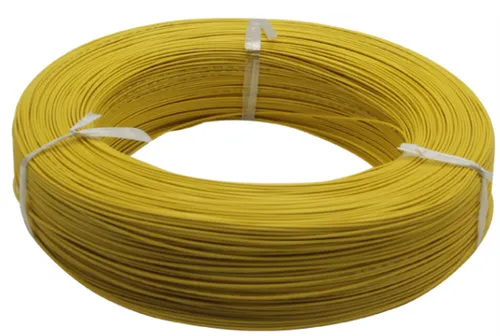
The service life of Teflon wire is affected by many factors, including usage environment, load current and maintenance conditions. Generally speaking, under normal circumstances, the service life of Teflon wire can reach more than 10 years.
The use environment is one of the key factors affecting the life of Teflon wire. If Teflon wire is exposed to high temperature, high humidity or strong acid and alkali environment for a long time, it will accelerate the aging, deterioration and failure of the wire. Therefore, during use, exposure to harsh environments should be avoided as much as possible.
Load current is also one of the factors that affects the life of Teflon wire. If the load current the wire bears exceeds the design value, it will cause the wire to overheat, age, and shorten its service life.
Our Factory
3F Electronics Industry Corp was established in 1996, after more than 20 years of continuous accumulation, 3F has become a group enterprise. The fields involved are: insulation materials, copper conductors, irradiation processing, wire harness processing, new energy, special cables, household cables, locomotive cables, communication cables, aerospace cables, insulating sleeves, cable accessories, etc. Annual sales of more than 1 billion yuan. The group is headquartered at No. 5, Zhenxing Road, Science City, Guangming District, covering an area of 20,000 square meters and self-built factory buildings of 35,000 square meters.

Certificate

FAQ
We're well-known as one of the leading teflon wire manufacturers and suppliers in China. Please feel free to buy or wholesale high quality teflon wire in stock here from our factory. Contact us for quotation.