
Our Certificate
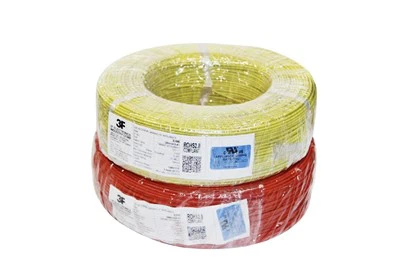
3F Electronics Industry Corp.Ltd passed the ISO9001 International Quality System certification in 2001,2009 in 2009 through TS16949 and QC080000 quality system, products obtain this CCC mandatory certification, American insurance laboratory UL certification.
Our Factory
3F Electronics Industry Corp.Ltd has insulation material plant, copper line processing plant, crossline irradiation plant.
Competitive price
We offer competitive prices and aim to provide our customers with affordable and cost-effective solutions.
Our service
The company is committed to training professional customer service personnel to provide customers with perfect products and multi-directional professional services.
What is XLPE Wire
XLPE Wire is a type of electrical cable commonly used for power transmission and distribution. XLPE cable is made of a thermoset material, which means it is highly resistant to heat, moisture, and chemicals. This makes it an ideal choice for applications where the cable will be exposed to harsh environmental conditions, such as underground or underwater installations.The XLPE insulation material is produced by chemically cross-linking polyethylene molecules. This process enhances the material's strength and stability, improving its ability to withstand high temperatures and electrical stresses. XLPE cable has a higher operating temperature compared to PVC (polyvinyl chloride) insulated cables.
-
![UL3266]()
-
![UL3386 XLPE Electronic Wire]() UL3386 XLPE Electronic WireElectrical insulation goodview more
UL3386 XLPE Electronic WireElectrical insulation goodview more
Low smoke and non-halogen
Electrical insulation good
Low temperature soft good performance
ROHS/REACH compliant
According to UL standard design -
![UL3173]()
-
![UL 3321]()
-
![UL3423 XLPE Connection Wire]() UL3423 XLPE Connection WireUsing the hot extrusion processingview more
UL3423 XLPE Connection WireUsing the hot extrusion processingview more
Excellent thermal stability
Low temperature soft good performance
Good flame retardancy
High of resistance to chemicals
ROHS/REACH compliant
According to UL standard design -
![UL3406 Electronic Internal Wire]() UL3406 Electronic Internal WireCondition:158±1.0℃/168Hview more
UL3406 Electronic Internal WireCondition:158±1.0℃/168Hview more
Dielectric withstand voltage:7.0KV AC
60 seconds without breakdown
Tensile strength≥13.8MPa
Elongation at break≥300%
If you have special needs,please let us know -
![UL4413 XLPE Flat Ribbon Cable]() UL4413 XLPE Flat Ribbon CableChemistry stability is goodview more
UL4413 XLPE Flat Ribbon CableChemistry stability is goodview more
Can be twisted pair and multi-core
Excellent thermal stability
Good flame retardancy
Using the hot extrusion processing
ROHS/REACH complian
According to UL standard design -
![UL3633 XLPE Insulation Wire]() UL3633 XLPE Insulation WireExcellent mechanical propertiesview more
UL3633 XLPE Insulation WireExcellent mechanical propertiesview more
Low temperature bending
Passed the US UL laboratory certification and ul vw-1 flame test
If you have special needs, please let us know -
![FL42X XLPE Insulation Wire]()
-
![FHLR2X-B XLPE Insulation Wire]() FHLR2X-B XLPE Insulation Wireroad vehicles with thin wall insulation single core no shielding high voltage cableview more
FHLR2X-B XLPE Insulation Wireroad vehicles with thin wall insulation single core no shielding high voltage cableview more -
![UL3377 XLPE Insulated Wire]() UL3377 XLPE Insulated WireCan be twisted pair and multi-coreview more
UL3377 XLPE Insulated WireCan be twisted pair and multi-coreview more
Low temperature soft good performance
Non-halogen
Chemistry stability is good
Excellent mechanical properties
ROHS/REACH compliant
According to UL standard design -
![UL1385 Extra Flexible Wire]() UL1385 Extra Flexible WireNon-halogenview more
UL1385 Extra Flexible WireNon-halogenview more
Can be twisted pair and multi-core
Electrical insulation good
Low temperature soft good performance
Good flame retardancy
Chemistry stability is good
ROHS/REACH compliant
According to UL standard...


Benefits of XLPE Wire
Crack and Abrasion Resistance
Stronger insulation means the cable offers better protection during installation and holds up better in harsh environments or varying temperatures. The wire is also better equipped to withstand long-term use by reducing environmental stress cracking.
Stress Resistance
Higher stress tolerance means the cable can be manipulated more without showing signs of damage. This means conductors can stretch, have better physical strength, and absorb crushing better than other insulation types.Stress resistance also applies to electrical stress, which happens when voltage flowing through the conductor creates hot spots in the wire. If enough damage occurs in these spots, the cable could eventually fail. XLPE insulation helps distribute electrical stress more evenly, preventing hot spots from forming and extending the wire's lifespan.
Oil and Gas Resistance
LDPE and HDPE are already good at resisting oil and gas damage, but crosslinking them boosts those properties even more, including at higher temperatures. As a result, crosslinked polyethylene can be used in harsher environments.
Heat Resistance
Once crosslinked, XLPE does not melt, so it excels in areas where the temperatures can get hot. Insulated conductors can withstand operating temperatures up to 120°C and even above 150°C in some cases without suffering damage.The insulation also protects other nearby wires and cables from heat generated by electrical currents traveling through a copper wire.
Types of XLPE Wire

Low Voltage XLPE Insulated Cables
These cables are designed for use in low voltage power distribution networks with a voltage rating of up to 1kV. They are typically used in homes, offices, and industrial applications.
Medium Voltage XLPE Insulated Cables
These cables are designed for use in medium voltage power distribution networks with a voltage rating of up to 35kV. They are used for power transmission and distribution in industries, commercial complexes, and residential areas.
High Voltage XLPE Insulated Cables
These cables are designed for use in high voltage power transmission networks with a voltage rating of up to 500kV. They are used for long-distance power transmission and distribution between power plants and substations.
Armored XLPE Insulated Cables
These cables have an additional layer of protection in the form of steel wire or tape armor. They are used in applications where the cable is exposed to mechanical stress, such as underground or underwater installations.
Unarmoured XLPE Insulated Cables
These cables do not have any armor and are used in applications where there is no risk of mechanical stress.
Fire Resistant XLPE Insulated Cables
These cables are designed to maintain their electrical properties even in the event of a fire. They are used in buildings, tunnels, and other applications where fire safety is critical.
Instrumentation XLPE Insulated Cables
These cables are used in instrumentation and control systems where signal transmission is critical. They have low capacitance and high insulation resistance, which ensures reliable signal transmission.
Application of XLPE Wire
Power Transmission and Distribution
XLPE wire are crucial components in high-voltage power transmission systems, interconnecting power plants, substations, and transmission grids. They efficiently transmit electricity over long distances, ensuring minimal power losses and reliable energy delivery.
Underground and Submarine Cabling
XLPE wire are well-suited for underground and submarine cabling projects due to their robustness and resistance to moisture and environmental stresses. They are used to supply power to urban areas, transportation networks, and offshore installations.
Industrial Applications
XLPE wire serve various industrial needs, powering machinery, motors, and equipment in factories, mines, and industrial plants. Their high current-carrying capacity and durability make them ideal for heavy-duty applications.
Renewable Energy Projects
In renewable energy installations, such as wind farms and solar power plants, XLPE wire play a critical role in transmitting generated electricity to the grid. They facilitate the integration of renewable energy sources into the existing power infrastructure.
Building Wiring and Infrastructure
XLPE wire are extensively used in buildings and infrastructure for electrical wiring, connecting lighting fixtures, outlets, and electrical panels. Their flexibility and ease of installation make them a preferred choice in construction projects.
Railways and Transportation
XLPE wire are employed in railways and transportation systems, providing power supply to trains, signaling systems, and electrified tracks. Their high reliability and resistance to mechanical stress make them suitable for rail applications.
Components of XLPE Wire
Conductor: The core of the cable is typically made of copper or aluminum conductors, responsible for carrying electrical current.
Insulation: The conductor is surrounded by a layer of Cross-Linked Polyethylene (XLPE) insulation. XLPE's cross-linked structure provides excellent electrical properties and thermal stability.
Screen (optional): In some XLPE cables, an insulation screen may be added to mitigate electric field stresses, thereby reducing partial discharges.
Metallic Screen (optional): For medium and high voltage cables, a metallic screen, such as copper tape or wire, may be applied to provide electromagnetic shielding.
Bedding: The bedding layer, typically made of PVC or LLDPE, protects the cable core and serves as a bedding for the armoring (if applicable).
Armoring (optional): For certain XLPE cables, steel or aluminum wires or tapes are used to provide mechanical protection and additional strength.
Sheath: The outermost layer is the cable sheath, which can be made of PVC, HDPE, or LSZH (Low Smoke Zero Halogen) material, offering protection against moisture, chemicals, and mechanical damage.
How to Choose XLPE Wire
Choose according to the purpose
1). If you want to use it for the transmission and distribution of electric energy, it is recommended to choose a power XLPE Wire;
2). If it is for the transmission of telephone, TV, or other electrical signals, you can choose a special communication XLPE Wire;
3). If it is specially used in the energy and transportation sector, industrial mining, or for control and protection circuits with AC-rated voltage below 450/750 volts, it is recommended to choose a control XLPE Wire.
Choose according to the laying conditions
1). If your use scenario is an environment that is prone to mechanical damage or external erosion factors, armored XLPE Wire are a more suitable choice because the outer metal protective layer can well protect the inner core of the XLPE Wire from damage;
2). If it is necessary to lay XLPE Wire and wires in high drop and vertical scenes, it is recommended to choose plastic insulated XLPE Wire with lightweight, simple structure, convenient operation, and easy maintenance to better complete the laying work;
3). Choose an anti-corrosion XLPE Wire if it is a used scene containing corrosive gas or objects.
Choose according to safety
1). If it needs to be used in a hospital or a scene with high requirements for environmental sanitation, it is best to choose a low-smoke halogen-free XLPE Wire. Because of the material's particularity, the composition does not contain halogen, and no toxic halogen acid gas will be produced when burned.
2). If you need to limit the combustion range, you can choose a flame-retardant XLPE Wire, which is suitable for places with a high density, such as power stations, large-scale mining, and oil fields, and has a higher degree of safety;
3). Some power consumption environments, such as nuclear power plants, subways, tunnels, etc., have stricter safety requirements. Even if a fire accident occurs, safety must be guaranteed, so fire-resistant XLPE Wire must be selected to ensure normal operation for some time after burning. , the power will not be cut off immediately, which is more conducive to rescue.
Choose according to the attributes of the work
When selecting a XLPE Wire, it is also necessary to refer to factors such as voltage loss, heating response, economical current density, and mechanical strength and make judgments and purchases based on working attributes.Generally speaking, because the current load of low-voltage power lines is relatively large, it is recommended to prioritize evaluating the heating conditions when purchasing; if it is a low-voltage lighting line, it is important to consider the voltage loss.The economical current density must be considered for high-voltage lines to achieve the most cost-effective use state. In addition, for high-voltage overhead lines, the mechanical strength of the XLPE Wire must be calculated to ensure more stable use.
How Do I Identify An XLPE Wire And PVC Wire
Cost is different
XLPE wire will spend higher than PVC flexible wire. So if you bought an electric wire and want to know the insulation material, you can judge it according to the cost you pay.
Thickness is different
Usually, XLPE insulation is used to produce power cable, to support higher voltage and load capacity, it is better to use a thicker conductor. On the other hand, PVC insulation load capacity and voltage are less than XLPE insulation, so this material is usually used to produce little thinner wire.

Conductor size is different
Since XLPE wire has a bigger conductor size, it usually carries bigger power can load compare with PVC copper wire. And the rated voltage of them is also different. PVC flexible wire rated voltage is 450/750V or 300/500V, but XLPE wire usually carries the rated voltage of 0.6/1KV. And the rated voltage usually appeared on the surface of the wire, this can as a reference for us to identify the wire specification.
Typing words on cable is different
PVC and XLPE wire both have different specifications and technical information, some of the information will be printed on wire. So we can also find some clues from the words typed on the wire.If you don't how to recognize these two kinds of wire, you can directly ask the seller. This is the easiest way you can identify the cable type.
How to Maintain XLPE Wire
Buy only genuine, high-grade industrial wires and XLPE Wire
This is obvious and needs no mention but still, industry owners leave it to electrical contractors who may buy cheaper products so insist they buy only quality XLPE Wire from wire and XLPE wire dealers in Ahmedabad. Insist on branded XLPE wire such as Polycab, Havells or Finolex and check before the contractor carries out the wiring.
Terminations and wiring method
Ensure that a suitable type of XLPE wire is used to handle the proposed load. If you expect 100 amperes load then choose a XLPE wire that will handle at least 150 amps or better still 200 amps. This way power surges are better handled and, in case of overload, the XLPE wire does not heat up and burn.Ensure proper termination methods and wiring methods are followed. Wires should not be drawn or stretched tight as a cost-saving measure. Allow slack. Use of terminations is recommended. In any case, ensure that the inner core does not bear the weight of the XLPE wire and that the XLPE wire is clamped properly.
Regular inspection
If you have an infrared thermometer then it pays to use it at regular intervals to check if overhead XLPE wire and XLPE wire feeding power to machines are not heating up beyond the ambient temperature. A few degrees higher temperature is permissible. If it goes beyond 60 deg.C it is a warning sign to check load, XLPE wire and possibly remove the cause of overheating or put in place thicker XLPE wire.Carry out visual checks to find if XLPE wire is nicked or cracked or shows signs of bubbling at any spot.
Records
It pays to maintain detailed records:Date of purchase and installation of XLPE wire.Which type of XLPE wire was used for which load points so you.know load carrying capacity of various lines.Record of failure and reasons for such failure.
Our Factory
3F Electronics Industry Corp was established in 1996, after more than 20 years of continuous accumulation, 3F has become a group enterprise. The fields involved are: insulation materials, copper conductors, irradiation processing, wire harness processing, new energy, special cables, household cables, locomotive cables, communication cables, aerospace cables, insulating sleeves, cable accessories, etc. Annual sales of more than 1 billion yuan. The group is headquartered at No. 5, Zhenxing Road, Science City, Guangming District, covering an area of 20,000 square meters and self-built factory buildings of 35,000 square meters.

Certificate

FAQ
We're well-known as one of the leading pe wire manufacturers and suppliers in China. Please feel free to buy or wholesale high quality pe wire in stock here from our factory. Contact us for quotation.
pe earth cable, pe sheathed cable, pe wire electrical