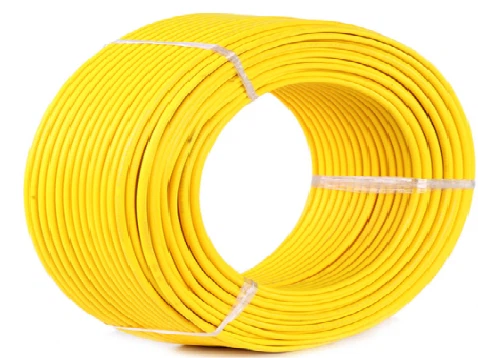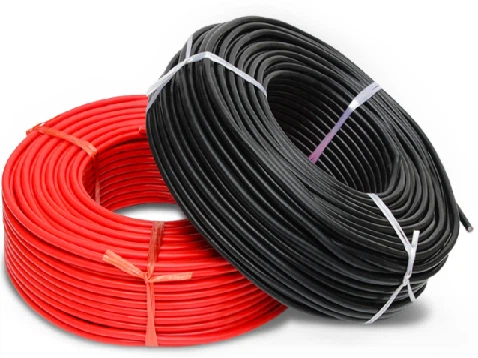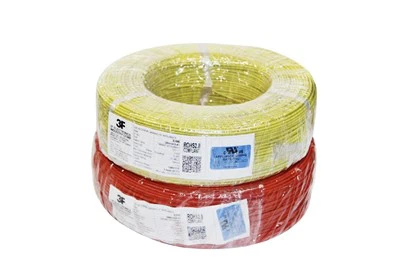

The insulation material, standards, and specifications of capacitor leads are key elements in ensuring the electrical performance, safety, and reliability of capacitors. The specific content is as follows:
1.Common insulation materials
The insulation material of capacitor leads needs to meet the requirements of insulation resistance, temperature resistance, mechanical strength, chemical resistance, etc. The common types and characteristics are as follows:
Polyvinyl chloride (PVC), cross-linked polyvinyl chloride (XLPVC)
Characteristics: Low cost, easy processing, good insulation performance, resistance to general acids, bases, and oils, but limited temperature resistance (usually -15℃~70℃, special modified models can reach 105℃). Flame retardancy can be improved by adding flame retardants.
Application: Suitable for medium and low voltage capacitors in ordinary environments (such as small ceramic capacitors, low-voltage electrolytic capacitors).
Cross linked polyethylene (XLPE)
Characteristics: High insulation resistance (better than PVC), good low temperature resistance (up to -60℃), high temperature resistance up to 150℃, strong chemical stability, moderate mechanical strength.
Application: Used for insulation of capacitor leads in low voltage and low temperature environments (such as some thin film capacitors).
Fluorinated polyethylene polypropylene (FEP), soluble polytetrafluoroethylene (PFA), polytetrafluoroethylene (PTFE)
Features: Extremely wide temperature resistance range (-200℃~260℃), corrosion resistance to strong acids, alkalis, organic solvents, etc., extremely high insulation resistance, excellent flame retardancy (non combustible), but high cost and difficult processing.
Application: Suitable for high temperature, strong corrosion or high cleanliness environments (such as high-voltage capacitors, military/aerospace grade capacitors).
Features: High and low temperature resistance (-60℃~200℃, special models up to 300℃), good elasticity, aging resistance, stable insulation performance, and customizable flame retardancy (such as UL94 V-0 level).
Application: Capacitors commonly used in harsh environments such as high temperature and vibration, such as electrolytic capacitors in automotive electronics and industrial control.
Heat shrink tubing (polyolefin based XLPO)
Characteristics: After heating, it shrinks tightly and wraps around the lead wire. It is insulated, sealed, wear-resistant, and has various temperature resistance levels (commonly 60℃~130℃). It can be modified to achieve flame retardancy (such as UL 94 V-0).
Application: Widely used for leads that require quick insulation wrapping, especially suitable for irregular or non-standard length capacitor leads.
Nitrile rubber (NBR) 90C, cross-linked sulfonated polyolefin (XLPPE) 105C, XLEPDM (cross-linked EPDM) 150C, XLFKW (cross-linked fluororubber) 200C
Features: Good oil resistance, excellent elasticity, temperature resistance range -40℃~200℃, moderate insulation performance, moderate cost.
Application: Capacitors used for contact with grease or mild oil pollution environments (such as capacitors in car engine compartments).

2.Relevant standards
The insulation material and performance of capacitor leads must comply with commonly used standards both domestically and internationally, covering indicators such as insulation, temperature resistance, and flame retardancy:
Domestic standards
GB/T 11026.1-2021: "Thermal resistance of electrical insulation materials - Part 1: Evaluation of aging procedures and test results" (specifies the thermal resistance level and test methods of insulation materials).
GB/T 1408.1-2016: "Test Methods for Electrical Strength of Insulation Materials Part 1: Power Frequency Test" (Test for Voltage Endurance Performance of Insulation Layer).
GB/T 1410-2006: Test Methods for Volume and Surface resistivity of Solid Insulation Materials (Insulation Resistance Requirements).
GB/T 2408-2008: "Determination of Burning Behavior of Plastics by Horizontal and Vertical Methods" (corresponding to flame retardant grades, such as V-0, V-1).
International standard
IEC 60684-3-2018: "Insulated hoses - Part 3: Specification for various types of hoses" (requirements for size, temperature resistance, flame retardancy, etc. of insulating sleeves).
UL 94-2013: "Burning Test for Plastic Materials Used in Equipment and Appliance Components" (flame retardant rating, such as V-0 being the highest grade, non flammable).
UL 1581-2020: Safety Standards for Wires, Cables, and Flexible Wires (covering insulation materials such as temperature resistance and mechanical strength).
VDE 0472-803: German standard that specifies the heat resistance level, insulation resistance, etc. of insulation materials (compatible with IEC).
3.Main specifications

The specifications need to be determined based on the performance parameters of the insulation material, lead size, and capacitor application scenarios. The core indicators are as follows:
Insulation layer thickness
Matching with lead diameter: Common lead diameters are 0.3mm~2mm, corresponding to insulation layer thicknesses of 0.1mm~0.5mm (such as 0.5mm diameter leads with 0.2mm insulation layer).
High voltage capacitor requirements: The insulation layer of the lead wire of high-voltage capacitors (such as 1kV or above) needs to be thicker (0.3mm~1mm) to improve the voltage resistance performance.
Temperature resistance grade
According to the IEC 60085 standard, it is divided into Y level (90℃), A level (105℃), E level (120℃), B level (130℃), F level (155℃), H level (180℃), and C level (>180℃).
Example: PVC is mostly A-grade (105℃), silicone rubber is mostly H-grade (180℃), and PTFE is C-grade (>260℃).
Flame retardant grade
According to UL 94 or GB/T 2408, common grades:
V-0: When burning vertically, it will self extinguish within 10 seconds without dripping and igniting the cotton below.
V-1:10 self extinguishing within 10 seconds, droplets can ignite cotton.
HB: Horizontal combustion, combustion speed ≤ 40mm/min (applicable to non flame retardant scenarios).
Insulation resistance
At room temperature (25℃), the volume resistivity is generally required to be ≥10¹⁰Ω· cm (XLPE and PTFE can reach 10¹⁴Ω· cm or more).
Voltage endurance value
AC withstand voltage: According to the rated voltage of the capacitor, the insulation layer needs to withstand an AC test of 1.5~2 times the rated voltage (such as a 500V capacitor lead, the insulation layer needs to withstand 1000V AC/1 minute without breakdown).
DC withstand voltage: High voltage capacitor leads need to be higher, such as 10kV capacitors corresponding to insulation layers that can withstand DC of 20kV or more.
Specification
Insulation layer length: Depending on the capacitor packaging, it is commonly 5mm~30mm (for example, the insulation layer of the chip capacitor lead only covers the root 2-5mm, while the direct insertion capacitor may cover the entire lead).
Color: mostly transparent, white, black (easy to distinguish polarity or specifications, such as identifying positive and negative poles with different colors of insulation layers on electrolytic capacitor leads).
In summary, the insulation materials, standards, and specifications of capacitor leads need to be selected comprehensively based on the type of capacitor (such as high/low voltage, high/room temperature) and application scenarios (such as industrial, automotive, aerospace) to ensure safety and reliability.