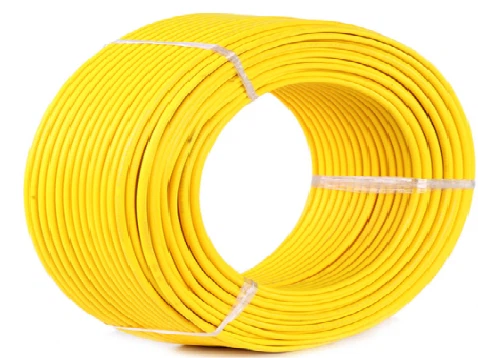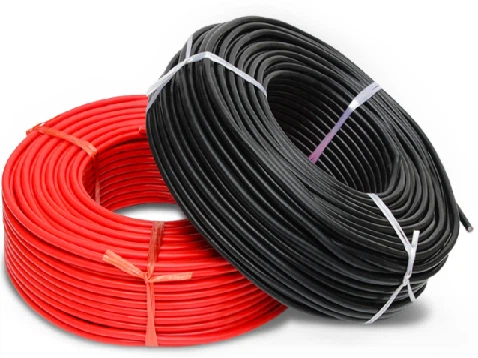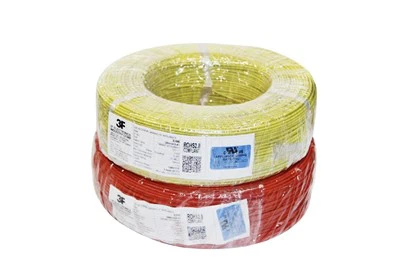

The core of wire selection for drones depends on current load, operating temperature, and equipment type. The mainstream uses American Wire Gauge (AWG) to indicate specifications, combined with high temperature resistant and lightweight insulation materials. The following are commonly used models and corresponding characteristics in different scenarios:
1.Core Wire Gauge (AWG) and Application Scenarios
AWG is the core labeling standard for drone wires. The smaller the number, the thicker the wire diameter, and the stronger the current carrying capacity. Different specifications correspond to equipment with different power requirements:
| AWG specification | Core Features | Typical application scenarios | Adapt devices/systems |
| 6-10 AWG | Coarse wire diameter, extremely strong current carrying capacity (suitable for high power above 1000W), resistant to high current impact | High power traversing aircraft, industrial grade unmanned aerial vehicle power mainline | 8S high-voltage battery system, high torque motor power supply line |
| 12-14 AWG | Medium to strong current carrying capacity, balancing flexibility and power transmission | Main power supply line for medium-sized aerial photography and 5-inch aerial vehicle | The main power supply line between the drone battery and ESC, 14AWG in the Ethix Quad builder kit, is suitable for the 5-inch drone XT60 interface main power supply |
| 16-18 AWG | Excellent flexibility, moderate current carrying capacity, lightweight | Mainstream aerial photography and power lines for small and medium-sized unmanned aerial vehicles | DJI RoboMaster development board XT30 power cord (18AWG silicone wire), core power cord of NewBeeDrone kit, suitable for connecting ordinary power motors and electric adjusters |
| 20-24 AWG | Thin wire diameter, outstanding lightweight, moderate current carrying capacity | Connection of low-power modules in unmanned aerial vehicles | Electric tuning and flight control signal lines, small sensor power supply lines, DJI development board 24AWG flexible flat wire (2Pin signal connection) |
| 26-30 AWG | Extremely fine, lightweight, with a small current carrying capacity | Low power devices, signal transmission | Image transmission module, LED indicator light, sensor signal wire, 30AWG wire in NewBeeDrone kit for precision electronic component connection |

2.Specialized selection based on drone type
Consumer grade drones
Mainstream models: 18-26 AWG silicone wire (core power), 26-30 AWG flexible flat wire (signal)
Representative case: DJI Mavic series and Mini series use 18-22 AWG silicone power wire, RoboMaster development board is matched with 26AWG PWM wire, sensor wire DJI
Features: Balancing lightweight and stability, suitable for medium power requirements of consumer grade equipment, insulation layer temperature resistance of 150-200℃
Crossover aircraft
Mainstream models: 6-14 AWG special soft silicone wire (power), 24-26 AWG signal wire
Core requirements: 6-10 AWG for high current (such as 8S battery system), 14-16 AWG for 5-inch tunneling machine, requiring strong flexibility (to avoid bending and fracture) and high temperature resistance (200℃)
Representative kits: Ethix Quad builder (14/18/26 AWG combination), NewBeeDrone (14/18/30 AWG combination)
Agricultural drones
Mainstream models: 2.5-6 mm2 copper wire (corresponding to 10-14 AWG), three-phase electrical input models require thicker wire diameter
Special requirement: Due to the high power of the charger (2600W-9000W), copper wires need to be selected to reduce losses. For example, for the DJI T30 agricultural drone, it is recommended to use a 6mm2 wire (about 10 AWG) for a single charger, and a 16mm2 wire (about 4 AWG) for two parallel chargers
Applicable scenario: High voltage battery (three-phase electric fast charging), high-power spray system power supply, temperature resistance needs to be more than 150℃
Tethered unmanned aerial vehicle
Special model: Optoelectronic composite optical fiber power cord (including silver plated copper wire+optical fiber)
Core parameters: conductor cross-section of 0.5mm2 (approximately 20 AWG), rated voltage of 1500V, temperature resistance of -40℃-200℃, both power transmission and data transmission functions, tensile strength≥50kg (to cope with airborne pulling)
Application: The tethered drone console is connected to the fuselage and requires high tensile strength, high temperature resistance, and lightweight characteristics
3.Key materials and supporting standards
①Insulation material selection (affecting durability)
| Material Type | Temperature resistance range | Applicable scenarios | Representative model |
| Silicone Wire | 150-200℃ | Consumer grade, time traveling machines, agricultural machines | 18-30 AWG extra soft silicone wire (mainstream choice) |
| Fluorine Glue Wire | 250℃+ | Industrial grade, high-temperature environment operation machine | 20-40 rmb/meter, suitable for harsh high temperature scenarios |
| PVC wire | ≤100℃ | Low power toy machine | 3-8 rmb/meter, low cost, not suitable for high-power equipment |
| Flexible Flat Wire (FFC) | 100-150℃ | Signal transmission | DJI development board 26 AWG FFC wire (3Pin/4Pin signal) |
②Supporting standards and precautions
Conductor material: Priority copper wire (high conductivity, low loss), silver plated copper wire can be used for industrial grade/mooring machines (to improve conductivity and corrosion resistance)
Certification requirements: Industrial grade drones must comply with UL standards, and automotive grade drone wiring harnesses must meet IATF16949 (such as agricultural drone high-voltage wiring harnesses)
Selection principle: Avoid "small wires carrying large loads" (such as 2.5 mm2 wires (14 AWG) that are not suitable for 7200W agricultural drone chargers), prioritize branded wires (to avoid uneven conductors and insulation layer peeling)
4.Summary
The drone wires are labeled with AWG wire gauge as the core, and the core selection logic is: the higher the power, the smaller the wire gauge number (the thicker the wire diameter). Consumer grade drones mainly use 18-26 AWG silicone wires, while crossing machines focus on 6-14 AWG high-power wires. Agricultural machines require 2.5-6 mm2 copper wires, while tethered machines use dedicated optoelectronic composite wires. In terms of material, the ultra soft silicone wire (200℃ temperature resistance) is the first choice for cost-effectiveness, while the fluorine rubber wire is suitable for extreme environments, and signal transmission mostly uses 26-30 AWG flexible wire.