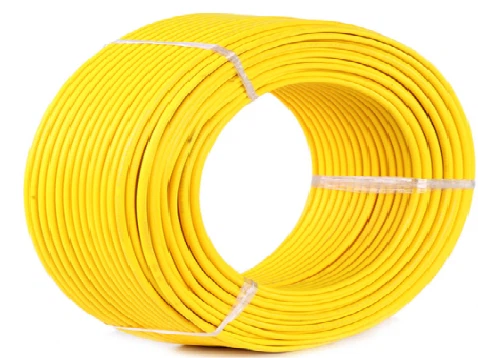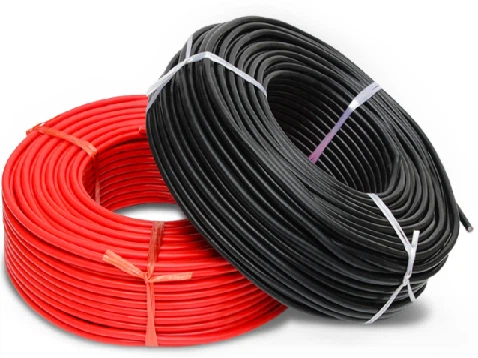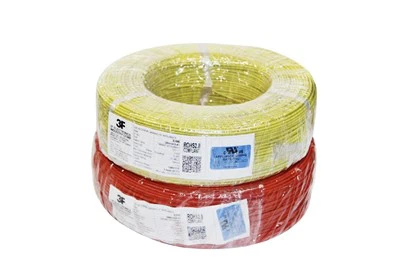

The wires of BMS (Battery Management System) need to adapt to the high and low voltage conditions, high and low temperature environments, and corrosion resistance requirements inside the battery pack. The insulation materials, models, and certifications are all selected based on safety and adaptability. The following is a detailed classification explanation:
1.Common insulation materials and corresponding wires
| Insulating material | Core Features | Suitable for BMS scenarios | Corresponding wire type |
| Cross linked polyolefin (XLPO/XLPE) | High temperature resistance, strong weather resistance, halogen-free flame retardant, good insulation stability, able to resist temperature fluctuations and chemical environments inside the battery pack | DC high-voltage lines connecting BMS with battery clusters, combiner boxes, etc., such as the main circuit connection line of energy storage system BMS | ESL10Z3-K/H type energy storage cable (XLPO insulation), UL1685 standard XLPO wire (resistant to 110℃, 2000V) |
| Teflon (PTFE/FEP/PFA) | Wide temperature resistance range (125-250℃), acid and alkali resistance, oil resistance, extremely strong insulation performance, suitable for harsh chemical environments | The precision circuits such as temperature sensing lines and voltage acquisition lines of BMS are particularly suitable for oil pollution and high temperature working conditions in new energy vehicles or industrial energy storage | AF-250, AFP-250 silver plated copper core PTFE insulated wire, 20AWG PTFE insulated waterproof line |
| Silicone rubber | High and low temperature resistance (-60-200℃), good flexibility, anti-aging, adapt to extreme temperature changes | BMS communication and control lines for outdoor energy storage devices, mobile energy storage vehicles, and other scenarios can cope with outdoor environments with large temperature differences | Silicone rubber insulated electronic wire for BMS of new energy vehicles, commonly used for short distance flexible wiring inside battery packs |
| Polyvinyl chloride (PVC) | Low cost, easy processing, basic insulation performance, temperature resistance range -25-70℃ | BMS low-voltage control lines and auxiliary lines for household small energy storage devices, in scenarios with low environmental requirements | Conventional low-voltage PVC electronic wire, compatible with BMS auxiliary power supply circuit |
| Polyurethane | Outstanding wear resistance and oil resistance, able to resist mechanical friction and oil pollution erosion | The onboard energy storage BMS wiring harness near the engine compartment can resist oil and chemical gas erosion inside the engine compartment | Vehicle BMS polyurethane insulated signal line, commonly used for wiring battery management systems in hybrid vehicles |
2.Common wire models

XLPO/XLPE insulation class
ESL10Z3-K/H (DC1000V, TUV certified, compatible with energy storage BMS); UL1685 series (such as A3U1819, A3U1619, etc., with specifications covering 18AWG -1111MCM, resistant to 110℃, 2000V, suitable for high-voltage BMS circuits).
Teflon insulation


3.Core Certification Standards
International universal certification
TUV certification (such as compliance with 2 PfG 2693/03.23 standards, suitable for energy storage BMS wiring harnesses in the European market, such as ESL10Z3-K/H cables); UL certification (UL758, UL1581, UL1685, covering requirements for flame retardancy, temperature resistance, etc., commonly used in the North American market, passed UL vertical combustion testing); IEC standards (IEC 60754-1/2 halogen-free, low corrosion requirements, IEC 60332-1-2 flame retardant standard, globally applicable).
Regional Special Certification
CE certification (required to comply with EN 61010 Electrical Safety and EN 62133-2 Battery System Safety, essential for European market access); CSA C22.2 No.210 (Canadian market certification standard, compatible with BMS wiring harness in North America); RoHS and REACH certifications (environmental certification, restriction of harmful substances, mandatory requirements for mainstream markets worldwide).
Industry specific certification
ISO certification (industrial general quality certification, such as BMS water blocking line often passing ISO certification); AAR S-501, AAR RP-585 (specialized certification for rail transit energy storage BMS wiring harness, compatible with the battery management system of rail vehicles).