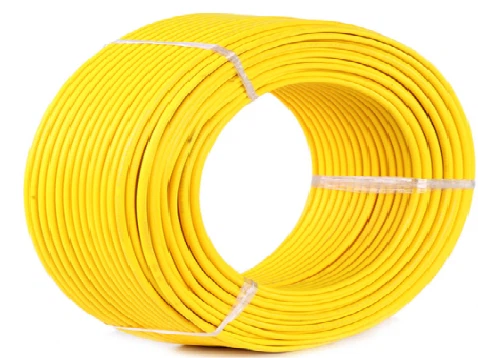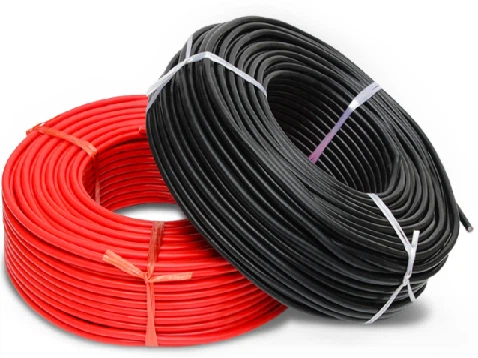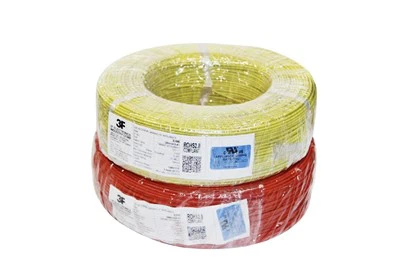

Category 5, Category 6 and super Category 6 communication cables (network cables) are the three most commonly used standards in Ethernet cabling. The core differences lie in transmission performance, structural design and application scenarios, all of which must comply with the ISO/IEC 11801 and EIA/TIA 568 series standards. The following is a detailed comparison and analysis from multiple dimensions:

1.Core parameter comparison (presented in a table)
| Comparison dimension | Category 5 cable (Cat.5) | Category 6 cable (Cat.6) | Category 6A cable (Cat.6A) |
| Transmission frequency | 100MHz | 250MHz | 500MHz |
| Maximum transmission rate | 100Mbps(100Base-TX),1Gbps(≤100m) | 1Gbps (stable within 100m), 10Gbps (≤55m) | 10Gbps (stable within 100m) |
|
Conductors Size |
24AWG (wire diameter approximately 0.51mm), mostly single-core/multi-strand bare copper | 23AWG (wire diameter approximately 0.57mm), mainly single-core bare copper | 23AWG or 24AWG, with some using multi-strand flexible cables (suitable for flexible wiring) |
| Structural design |
It has no skeleton, only four pairs of twisted wires twisted together |
Cross-shaped insulated frame (separating four pairs of wires and reducing crosstalk) | Cross-shaped frame/gear-shaped frame (more closely separated), some with shielding layer |
| Crosstalk performance (NEXT) | At 100MHz≥27.1dB (near-end crosstalk) | At 250MHz≥44.3dB (near-end crosstalk), a new test requirement of "Alien NEXT" (external crosstalk) has been added | At 500MHz≥45.1dB (near-end crosstalk), enhanced "Alien NEXT" protection (key indicator) |
| Signal attenuation | At 100MHz≤24.0dB/100m | At 250MHz≤23.2dB/100m | At 500MHz≤21.8dB/100m |
|
Anti-interference type |
Only Unshielded (UTP) | Unshielded (UTP), shielded (STP/FTP) | Unshielded (UTP), shielded (STP/FTP/SFTP, stronger anti-interference) |
| Outer sheath material | Mainly flame-retardant PVC | Flame-retardant PVC, low smoke zero halogen (LSZH, suitable for computer rooms/public areas) |
Flame-retardant PVC, low smoke zero halogen (LSZH), some weather-resistant types are suitable for outdoor use |
2.In-depth analysis of Key differences
(1)Structural design: From "frameless" to "reinforced separation", the core solution is to address the "crosstalk" issue
Category 5 cable: It only relies on the twisting density of four pairs of twisted wires to reduce crosstalk, has no additional isolation structure, and has weak anti-interference ability. It is only suitable for low-frequency scenarios (below 100MHz).
Category 6 cable: A new cross-shaped insulating skeleton (mostly made of HDPE) is added, which fixes the four pairs of twisted wires in four grooves respectively, completely avoiding direct contact between the wire pairs and significantly reducing "near-end crosstalk (NEXT)" - this is the core design of Category 6 that can support a frequency of 250MHz.
Category 6A cable: On the basis of Category 6, the skeleton is optimized (such as gear-shaped, double-layer separation) to further enhance the isolation degree of the wire pair. Meanwhile, the design is strengthened for "Alien NEXT" (mutual interference when multiple cables are running in parallel), which is the key for Super Category 6 to stably support 10Gbps/100m (Category 6 can only transmit 55m at 10Gbps due to Alien NEXT).
(2)Performance ceiling: From "100 megabits" to "10 gigabit", suitable for different bandwidth requirements
Category 5 cable: Essentially a "100-megabit cable", it can only temporarily support 1Gbps (Gigabit Ethernet) in short-distance (≤100m) and low-interference environments. However, it has poor stability and is prone to packet loss due to crosstalk. It has gradually been phased out (only used for the renovation of old networks).
Category 6 cables: "The main force of gigabit", can stably transmit 1Gbps within 100m and support 10Gbps (10G) within 55m. They offer high cost performance and are the mainstream choice for current households and small and medium-sized enterprises.
Category 6A cable: "10G standard", stably supporting 10Gbps within 100m, and the frequency has been increased to 500MHz, reserving the potential for future higher bandwidths (such as 25Gbps/40Gbps short-distance transmission), suitable for high-density cabling scenarios such as data centers and enterprise core computer rooms.
(3)Anti-interference capability: The shielding design is suitable for complex environments
All three types of cables have "unshielded (UTP)" versions, but Category 6 and Super Category 6 have added "shielded versions" (such as STP: metal mesh shielded; FTP: aluminum foil shielded) to deal with strong interference environments (such as computer rooms, factory workshops, and areas close to strong current lines) :Class 6 shielding type: Reduces the impact of external interference on 250MHz signals to ensure stable gigabit transmission;Category 6A shielded models (such as SFTP: Double-layer shielding) : At a high frequency of 500MHz, they completely block external crosstalk and electromagnetic interference (EMI), making them the preferred choice for 10Gbps data center cabling.

3.Summary: How to choose?
| Demand scenario |
Recommended cable type |
Core reason |
| Upgrade of the old network and the basic demand for 100 megabits | Category 5 cable |
Make use of the existing wiring to reduce costs and only meet the basic functions |
| Newly renovated families and small and medium-sized enterprises | Category 6 cable |
High cost performance, supports gigabit transmission, no need for upgrade in the next 5 to 8 years, compatible with mainstream network devices |
|
Data centers, enterprise core computer rooms, high-end homes |
Category 6A cable | Supports 10-gigabit transmission, has strong anti-interference ability, reserves potential for future bandwidth, and avoids the cost of secondary wiring |
In short, the selection of Category Three cables is essentially a "balance between demand and budget" - if the budget is limited and only gigabit is needed, Category six is sufficient. If 10-gigabit or future upgrades are needed, Category 6A is a more reliable choice. Category 5 is only recommended for the renovation of old networks and is not recommended for new wiring.