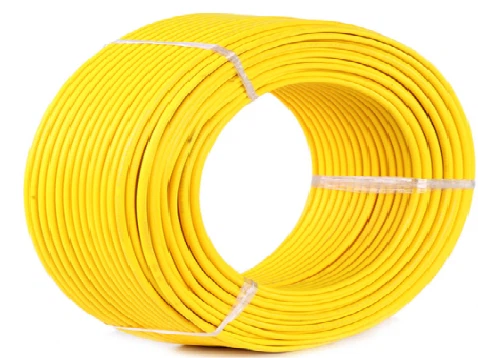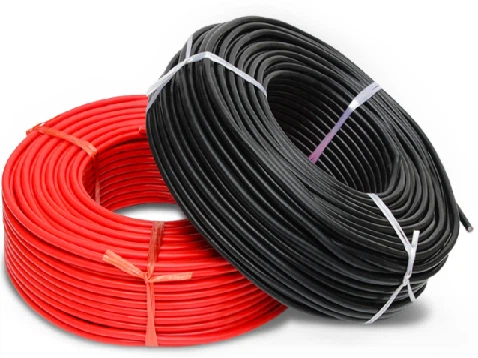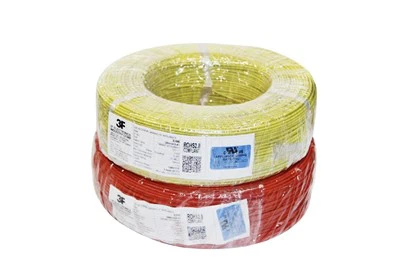

3F can produce all wires and cables that comply with EU standards (except for RN neoprene rubber insulation materials), and all can be affixed with CE certification.Some specifications such as H05V-K, H07V-K, H05S-K, H05Z-K, H07Z-K, as well as FEP, PFA, PTFE and silicone rubber German industrial standard wires, Qifurui has a dedicated VDE laboratory certification.

The numbering rules of wires in Germany are mainly based on the VDE standards (Verband der Elektrotechnik, Elektronik und Informationstechnik, standards of the German Association for Electrical, Electronic and Information Technology), and some also refer to DIN (German Industrial Standards). Its numbering system aims to clearly identify the electrical performance, material properties, structural design and applicable scenarios of the wires. The following are the core numbering rules and their explanations:
1.Core standard system
The numbering of German electronic wires is based on the VDE standard code (such as VDE 0812, VDE 0813, etc.), among which:
VDE 0812: Applicable to insulated flexible wires (such as internal connection wires of equipment, power leads)
VDE 0813: Suitable for high-temperature insulated flexible wires (such as fluoroplastic wires that can withstand temperatures above 200℃)
VDE 0281: General requirements for cables and flexible cords (including general specifications for conductors, insulating materials, etc.)
Model numbers are usually represented by a combination of "letters + numbers + letters", with each part corresponding to specific parameters.
2.Analysis of Core Elements of Numbering
(1)Prefix letter: Standard system identifier
H: It stands for "Harmonized (harmonized standard)", which complies with the EU harmonized standard (EN standard) and can be directly applied to CE certified products. It is the most common prefix (such as H05V-K).
Non-h prefix: It might be an old German standard or a specific industry standard (such as a special model for rail transit), but it has been gradually replaced by harmonized standards with the H prefix.
(2)Digital part: Rated voltage level
The number is usually two digits, representing the rated voltage of the wire (unit: V). Common grades:
05: Rated voltage 500V (Low voltage, suitable for low-voltage connections inside the equipment)
07: Rated voltage 750V (Medium and high voltage, suitable for power lines and outdoor wiring)
09: Rated voltage 300/500V (Commonly used in building wires and power cords of household appliances)
10: Rated voltage: 450/750V (Higher voltage, for industrial equipment)
Rated voltage: 450/750V (Higher voltage, for industrial equipment)

(3)Suffix letters (first group) : Insulating materials
The material for identifying the insulation layer of the wire, core code:
V: PVC (polyvinyl chloride), the most commonly used insulating material, is low in cost and can withstand temperatures ranging from 70 to 105℃, making it suitable for conventional environments
F: Fluoroplastics (such as FEP, PTFE), resistant to high temperatures (150-250℃) and chemical corrosion, are suitable for high-temperature/highly corrosive scenarios
S: Silicone rubber, resistant to high and low temperatures (-60℃ to 200℃), has good flexibility and is suitable for high-temperature equipment or scenarios with frequent bending
R: Rubber (such as chloroprene rubber), with strong weather resistance and anti-aging properties, is suitable for outdoor or mobile equipment (such as cable drag chains)
T: Thermoplastic elastomer (TPE), environmentally friendly and oil-resistant, can replace PVC in food-grade or scenarios with high environmental protection requirements
Example: In H05V-K, "V" indicates PVC insulation. In H07F-K, "F" indicates fluoroplastic insulation.
(4)Suffix letters (Group 2) : Sheath material (if any)
Some wires are equipped with sheaths (outer protection), and the material code of the sheath is consistent with that of the insulating material, represented by the second letter:
VV: PVC insulation + PVC sheath (such as H09VV-F, commonly found in household power cords)
RF: Rubber insulation + fluoroplastic sheath (suitable for outdoor high-temperature environments)
No second letter: Indicates no separate sheath (only insulation layer, such as H05V-K)
(5)Suffix letters (Group 3) : Conductor structure
Mark the twisting method of the conductor (affecting flexibility), core code:
K: Fine twisted conductor (" Klein ", fine), made by twisting multiple strands of fine copper wire together, has excellent flexibility and is suitable for frequent bending (such as internal wiring of equipment, robot wiring harnesses)
F: Medium-stranded conductor (" Fach ", conventional), with fewer strands, thicker diameter, and medium flexibility, suitable for fixed installation (such as building wiring)
G: Coarse-twisted conductor (" Groß ", thick), with fewer strands, larger diameter, and stronger rigidity, is suitable for high-current fixed wiring
Example: In H05V-K, "K" represents a fine-twisted conductor (high flexibility); In H09VV-F, "F" stands for medium-stranded conductor.
(6)Additional identification: Special functions (such as shielding, temperature resistance)
SH: Braided Shield (" Shield "), such as H05V-K SH (PVC insulated flexible wire with braided shield)
ST: Winding shielding (" Screen "), suitable for shielding high-frequency signals
Temperature grade: It is usually not directly reflected in the model but distinguished by the standard number (for example, VDE 0813 corresponds to a high-temperature wire resistant to 200℃, with insulation material of F or S)
3.Typical model examples and disassembly
H05V-K
H: Complies with the harmonized standards of the European Union
05: Rated voltage 500V
V: PVC insulation
K: Fine-twisted copper conductor (high flexibility)
H07RN-F
H: Coordination standards
07: Rated voltage 750V
R: Rubber insulation
N: Neoprene rubber sheath (weather-resistant)
F: Medium-stranded conductor
H09VV-F
H: Coordination standards
09: Rated voltage 300/500V
V: PVC insulation
V: PVC sheath
F: Medium-stranded conductor
H05F-K SH
H: Coordination standards
05:50V
F: Fluoroplastic insulation (resistant to 200℃)
K: Fine-twisted conductor
SH: Woven shielding
4.The core function of numbering
(1)Compliance marking: Ensure that the wires comply with VDE/DIN standards and meet the electrical safety requirements of Germany and the European Union (such as CE certification)
(2)Rapid performance identification: Key parameters such as voltage, material, and flexibility can be directly determined through the number, facilitating model selection
(3)Application scenario matching: Different numbers correspond to fixed applicable environments (such as low pressure/high pressure, high temperature/conventional, fixed/mobile)
The numbering of electronic wires in Germany is centered around the VDE standard. Through the combination of "prefix (standard system) + number (voltage) + letter (material/structure)", the key performance of the wires is clearly identified. Mastering this rule can quickly determine the applicable scenarios of wires, which is particularly crucial in the selection of industrial equipment, automotive electronics, high-temperature environments and other fields.