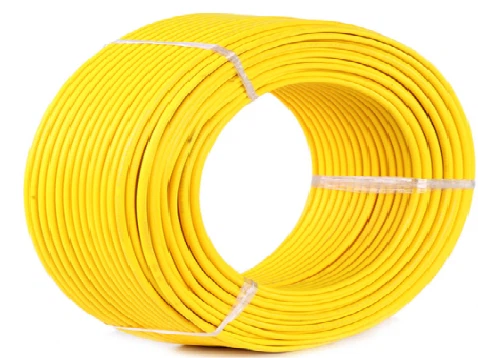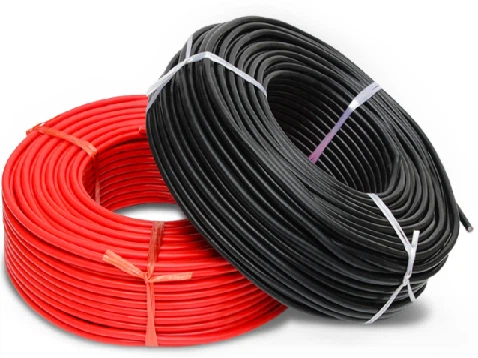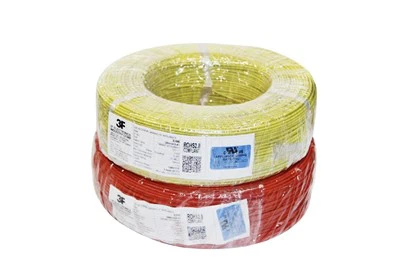

"Litz cable magnet wire"refers to "Litz wire", also known as braided wire or twisted wire, which is a special type of wire made by twisting or weaving multiple insulated thin wires.

Structural characteristics
(1)Stranded: Twisted or woven into a uniform pattern by many individually insulated magnet wires. These single stranded wires typically have smaller diameters, and common Leeds wire specifications are represented as "n/xx", where n represents the number of strands and xx represents the American Wire Gauge (AWG) size of each single stranded wire.
(2)Insulation characteristics: Each single stranded wire has its own insulation layer, and commonly used insulation materials include polyurethane nylon, which can meet the NEMA MW 80-C industry standard. Insulation film can also be coated on ordinary Leeds wires, such as using extruded thermoplastic materials to increase additional insulation performance, improve dielectric strength, breakdown voltage, heat resistance, and flexibility.
Working principle
(1)Reduce skin effect: When current passes through a conductor, due to skin effect, high-frequency current will concentrate on the surface of the conductor, causing the current density inside the conductor to decrease, thereby increasing the effective resistance of the conductor and leading to increased power loss. The Leeds line increases the surface area of the conductor by twisting multiple thin wires together, allowing current to be more evenly distributed across the conductor cross-section, thereby reducing losses caused by skin effect.
(2)Reduce proximity effect losses: In the structure of multiple stranded wires, the distance between each individual wire is relatively small and insulated from each other, which helps to reduce eddy current losses caused by proximity effects. Because the eddy currents generated by the external alternating magnetic field in a single wire cancel or weaken each other, thereby reducing the overall loss.
Performance advantages
(1)Good high-frequency performance: In high-frequency applications, it can significantly reduce resistance losses, improve transmission efficiency, and make circuit performance more stable and reliable. For example, in the fields of high-frequency transformers, RF circuits, wireless charging, etc., Leeds lines can effectively reduce energy loss, improve equipment efficiency and power density.
(2)Excellent flexibility: The structure of multiple strands of thin wires twisted together makes Leeds wire have good flexibility, easy to bend and route, and can adapt to various complex installation environments and shape requirements, making it convenient to use in different electronic devices and circuits.
(3)High filling factor: In applications such as winding coils, Leeds wire can achieve a high filling factor, which means it can wind more turns in a limited space, thereby increasing the inductance of the coil and improving electromagnetic conversion efficiency. This is of great significance for the design of miniaturized and high-performance electromagnetic components.
Application area
(1)In the field of power electronics, it is widely used in high-frequency switching power supplies, inverters, frequency converters and other equipment to produce high-frequency transformers, energy storage inductors and other components. It can effectively reduce copper and iron losses, improve equipment efficiency and power density.
(2)In the field of new energy vehicles, it plays a key role in components such as on-board chargers (OBC), DC/DC converters, and wireless charging systems, which can improve charging efficiency, extend battery range, and meet the high reliability and safety requirements of the vehicle's electrical system.
(3)In the field of medical equipment, such as magnetic resonance imaging (MRI) systems, ultrasound diagnostic equipment, etc., the Leeds line is used to construct high-precision electromagnetic coils that can provide stable magnetic fields and signal transmission, helping to improve the accuracy and reliability of medical diagnosis.
(4)In the field of communication, Leeds line can be used to achieve efficient RF signal transmission and processing, reduce signal loss, improve communication quality and transmission distance in RFID systems, antennas, filters and other communication equipment.

There are various models of standard "Litz cable magnet wire", including some common ones such as UL1333, UL3266, and so on. In addition, some other models, such as high-temperature wires that comply with UL standards, such as silicone rubber insulated wires at 150℃ and 200℃, may also use Leeds wire structure. In practical applications, it is necessary to choose the appropriate Leeds wire model based on specific usage environment, electrical performance requirements, and other factors.