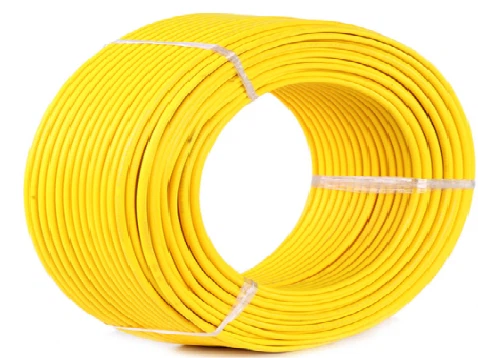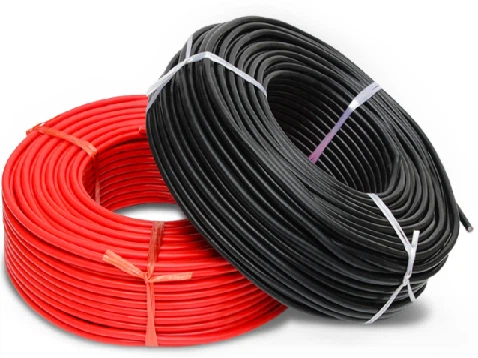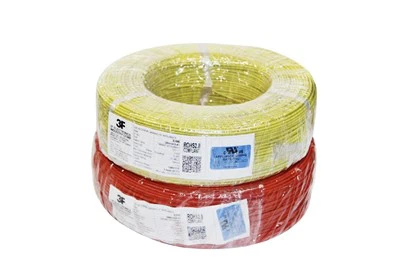

3F silicone rubber wire (platinum vulcanization process upgrade):
Platinum sulfide (hydrosilylation) has prominent advantages over bis (2,4-dichlorobenzoyl peroxide) sulfide core
Firstly, clarify the mechanism differences:
Double 2,4: peroxide free radical crosslinking, decomposition produces small molecule by-products such as 2,4-dichlorobenzoic acid and chlorinated aromatic hydrocarbons;
Platinum vulcanization: Pt catalyzed addition crosslinking of vinyl silicone rubber and hydrogen containing silicone oil, without the generation of small molecule by-products, which is the root of all advantages.
1,Material purity | No precipitation, no frost spraying (the most prominent pain point of the cable is improved)
No frost spraying/whitening phenomenon
2,4-Dichlorobenzoic acid, a byproduct of 2,4-Dichlorobenzoic acid, has poor compatibility with silicone rubber. After wire storage and high-temperature operation, it slowly migrates to the insulation surface, forming white crystalline "frost"; Platinum sulfide has no such small molecules, and its surface is clean after long-term use, without contaminating connectors, terminals, and circuit boards.
Extremely low extractables, no VOC (no harmful gas emissions)
The residual by-products of Double 24 belong to volatile polar organic compounds, which continuously precipitate during high-temperature operation; The platinum system has almost no free small molecules and is suitable for internal wiring in closed control cabinets, power battery compartments, and precision instruments.
Risk of halogen-free by-products
Double 24 decomposes chlorine containing components, and there is a risk of trace amounts of polycyclic aromatic hydrocarbons under extreme conditions; Platinum system does not contain halogen elements, making it easier to meet the high-end standards of halogen-free cables, low smoke and low toxicity.
2,More stable electrical insulation performance (key advantage of high-voltage and high-temperature cables)

Lower dielectric loss and insulation attenuation at high temperatures
The residual polarity by-products of Double 24 will increase dielectric loss and reduce breakdown strength; After long-term thermal aging, the electrical performance deteriorates significantly. Platinum cross-linked network is pure, with better insulation stability under high temperature and long-term service, suitable for new energy high-voltage silicone wires and UL high-temperature electronic wires.
Will not corrode copper conductors and tin plating layers
The decomposition products of Double 24 are weakly acidic and slightly corrode metal conductors under long-term high temperature; The platinum sulfide system is neutral, effectively delaying the oxidation and blackening of conductors.
3,Process simplification: Most scenarios can eliminate secondary vulcanization (secondary baking)
Double 24 standard requires two-stage vulcanization (180-200 ℃/2-4 hours) to drive away by-products, reduce frost, and remove odors; Occupying an oven, high energy consumption, extended delivery time, and thin-walled thin wires are also prone to thermal deformation.
Platinum vulcanization: One continuous hot air vulcanization can meet the standard, eliminating the need for a two-stage vulcanization process, reducing wire thermal deformation, lowering energy consumption, and improving extrusion production line turnover.
Note: Ultra high clean medical grade wires can still be selectively added for a short period of time, which is not a mandatory requirement.
4,Appearance, aging resistance, and long-term stability
Excellent resistance to yellowing and degeneration
Double tetrasulfide wire is prone to yellowing at high temperatures for a long time; Platinum system has better resistance to thermal oxidative aging, and transparent/light colored wires can maintain their appearance for a long time.
Balanced mechanical properties, better rebound and tear resistance
Addition crosslinking forms Si-C crosslinking bonds, and the crosslinking network is uniform; The finished product has better tear resistance and repeated bending fatigue performance, suitable for frequent bending of robot cables and servo connection wires.
No persistent odor
Double 24 wire has its own characteristic irritating odor, which intensifies at high temperatures; Platinum sulfide wire is odorless and suitable for wiring in car harnesses, food equipment, and indoor cleaning equipment.
5,Environmental protection and certification advantages, suitable for the high-end export market
Extremely easy to control substances of high concern through FDA, LFGB, RoHS, REACH; Double 24 by-products can cause dissolution and volatile matter testing to fail, making it difficult to meet food contact and medical equipment cable standards.
Less exhaust gas in the production workshop: Double 24 extrusion vulcanization requires strong exhaust gas treatment; The load of platinum sulfide waste gas has significantly decreased, and the cost of environmental governance has decreased.
6,Processing window characteristics (advantages of extrusion production end)
The vulcanization temperature range is wider and can initiate cross-linking at low temperatures; Under the same drying channel length, the upper limit of extrusion line speed is higher, which increases production capacity.
Black carbon black formula is not excluded: the Double 24 system cannot add a large amount of carbon black (carbon black quenches free radicals, causing incomplete sulfurization); Platinum vulcanization can stably produce black flame-retardant silicone wires