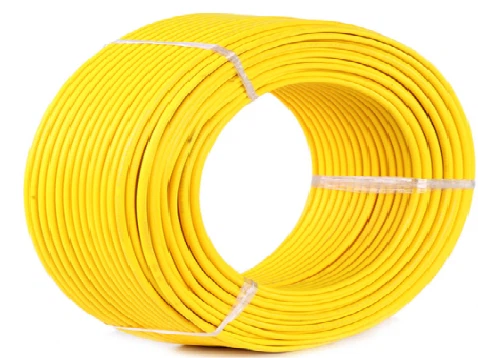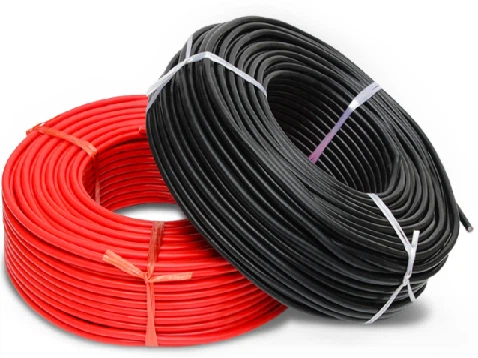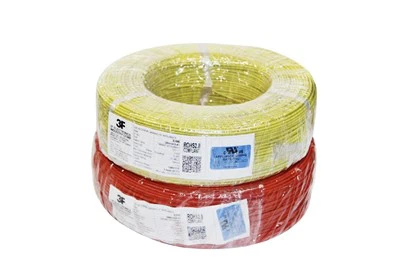

Throughout the long history of wire usage, long-term durability has always been a key indicator for measuring its quality. PTFE wires, with their unique performance, far surpass traditional wires in terms of durability, providing more durable and reliable services for various application scenarios.

Excellent chemical stability: resistant to the erosion of time
Traditional wires usually have rubber or PVC insulation. When they're out in the air for ages, oxygen and water vapor team up to start a chemical party. This makes the insulation layer wrinkle, crack, and eventually can cause wire short - circuits.PTFE wires are different. Their insulation is made of polytetrafluoroethylene, a material with super - strong chemical chill. No matter if it's a super - corrosive acid or alkali scene, or a wet, rainy mess, it just shrugs off reactions.In chemical factories, where corrosive chemicals are everywhere, traditional wires conk out after a few years and need replacing.PTFE wires? They can keep going strong for decades. This saves a ton of money and hassle from constantly swapping out old, worn - out wires.
Excellent high temperature resistance: fearless of high temperature tests
In many industrial production and electrical equipment operations, wires generate a large amount of heat, and high temperatures become a major "killer" that affects the lifespan of wires. The insulation material of traditional wires is prone to softening and deformation at high temperatures, resulting in a significant decrease in insulation performance and accelerating wire damage. PTFE wires are completely different, as they can easily handle sustained high temperatures up to 260 ℃ and even withstand higher temperatures in a short period of time. This is due to the stable molecular structure of PTFE material, which makes the chemical bonds between its molecules difficult to break even in high-temperature environments. For example, in high heat areas such as industrial furnaces and car engine compartments, PTFE wires work stably for a long time, while traditional wires may already be overwhelmed and frequently fail.
Excellent wear resistance: Dealing with mechanical friction
In real - world use, wires face all sorts of rubbing. When being threaded through conduits or as equipment runs, they rub against other parts. Regular wires have soft insulation that doesn't stand up well to wear. After a long time of rubbing, the insulation gets damaged, leaving the inner wire exposed and risky.PTFE wires are a different story. Their surface has an incredibly low friction, as if they're wearing a "slippery shield". When friction hits, the PTFE insulation stays strong and doesn't wear down easily.Take cranes' power cables or robots' inner wiring, which bend and move a lot. PTFE wires, with their great wear - resistance, last way longer. This means less time when the equipment has to stop for maintenance because of wire problems.

Extremely low moisture absorption: maintains stable performance
The harm of humid environment to wires should not be underestimated. Traditional insulation materials for wires mostly have a certain degree of moisture absorption, which can cause a decrease in insulation resistance and lead to problems such as leakage and short circuit after absorbing moisture. The insulation layer of PTFE wire hardly absorbs water, and moisture cannot penetrate into the interior, affecting the performance of the conductor. Whether in the humid rainy season in the south or in extremely high humidity environments such as underwater operations, PTFE wires can always maintain stable electrical performance, ensuring the safe operation of equipment.
From chemical stability, high temperature resistance, wear resistance to low moisture absorption, it surpass traditional wires in all key factors that affect long-term durability. For example, UL1213 and UL1180 in PTFE wires can be applied in modern industrial and residential electricity scenarios, laying a solid foundation for long-term stable power supply.