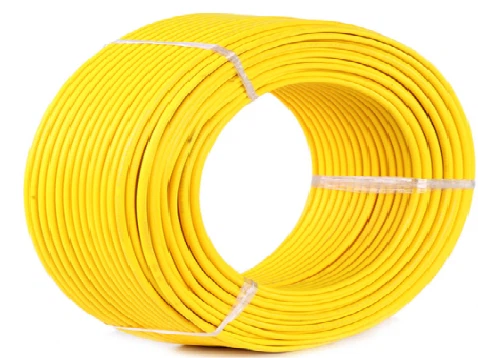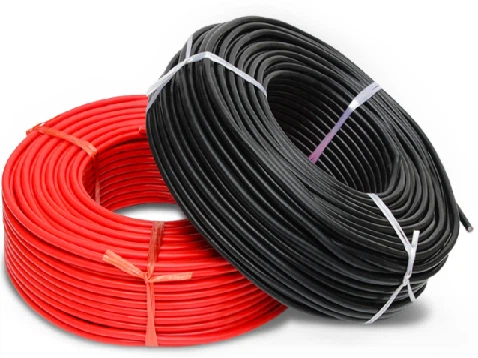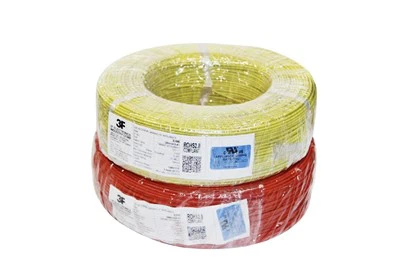

Industrial wires, as key components of electrical systems, must comply with the standards and certification requirements of various countries and regions in terms of safety, reliability, and compatibility.
The following are the industrial wire standards and certification systems of major countries/regions worldwide, covering key information such as standard organizations, core standard scope, and certification marks:
1.International General Standards (Basic Reference)
International Electrotechnical Commission (IEC)
Developing globally unified electrical standards is an important reference for national standards.
Core standards:
IEC 60227: General purpose polyvinyl chloride insulated cables (for fixed wiring)
IEC 60245: Rubber insulated cables (including mobile, fixed, etc.)
IEC 60502: Power cables with rated voltage from 1kV to 30kV
IEC 60332: Test standard for flame retardancy of cables (e.g. single vertical burning, bundled burning)
Function: To provide fundamental technical specifications, on which countries often develop their own standards (such as equivalent adoption or modified adoption).

2.Main national/regional standards and certifications
(1)China (CN)
Standard organization: National Standardization Administration (SAC), equivalent to adopting IEC standards and developing national standards (GB) based on national conditions.
Core standards:
GB 5023: Polyvinyl chloride insulated cables (corresponding to IEC 60227)
GB 5013: Rubber insulated cables (corresponding to IEC 60245)
GB/T 12706: High voltage power cables (corresponding to IEC 60502)
GB 18380: Standard for cable combustion performance (flame retardant, fire-resistant, etc.)
Compulsory authentication:
CCC certification(China Compulsory Certification)
It belongs to mandatory safety certification, covering most industrial wires (such as wires and cables with rated voltage≤450/750V), and cannot be sold in the Chinese market without CCC mark.
(2)United States (US)
Standard organizations: Underwriters Laboratories (UL), American National Standards Institute (ANSI), American Society for Testing and Materials (ASTM).
Core standards:
UL standard:
UL 44: Rubber insulated cables (including high temperature, oil resistance, and other characteristics)
UL 83: Polyvinyl chloride insulated cables (for fixed wiring)
UL 1581: Test Methods for Burning and Mechanical Properties of Wires and Cables
NFPA 70 (NEC, National Electrical Code): specifies the installation and usage scenarios of wires (such as conductor specifications, insulation level matching environment)
Key authentication:
UL certification: Non mandatory but market mandatory, marked as "UL Listed", representing compliance with safety standards, widely recognized in the US and North American markets.
ETL certification: issued by Intertek, equivalent to UL, and also accepted by the North American market.

(3)Europe (EU)
Standard organizations: European Committee for Standardization (CEN), European Committee for Electrotechnical Standardization (CENELEC), promote "CE certification" for unified market access.
Core standards:
EN standard (equivalent to IEC, with only minor adjustments):
EN 50227: Polyvinyl chloride insulated cables
EN 50245: Rubber insulated cables
EN 50525: Special purpose cables such as electric vehicle charging cables
Coordinated standards: It must comply with the European Union's Low Voltage Directive (LVD, 2014/35/EU) and pass EN standard testing to affix the CE mark.
Other certifications:
VDE certification (Germany): issued by the German Institute of Electrical Engineers, with higher strictness than EN standards, highly recognized in the European and global markets, especially suitable for high-end industrial fields such as automobiles and machinery.
CE mark: a mandatory admission mark that proves that the product meets the safety, health, and environmental requirements of the European Union.
(4)Japan (JP)
Standard organization: Japanese Industrial Standards Institute (JIS).
Core standards:
JIS C 3005: Polyvinyl chloride insulated cables (fixed wiring)
JIS C 3006: Rubber Insulated Cables
JIS C 3008: Heat resistant insulated cables (for use in high temperature environments)
Certification requirements:
PSE certification: Japan's mandatory safety certification is divided into "specific electrical appliances" and "non-specific electrical appliances". Industrial wires mostly belong to non-specific electrical appliances and need to pass testing and affix the PSE logo (circular logo).
(5)United Kingdom (UK)
After Brexit, some EU standards will be retained while gradually implementing domestic standards.
Core standards:
Adhere to EN standards (such as BS EN 50227), but comply with the UK UKCA certification (replacing the original CE mark for market access in the UK).
Authentication:
UKCA certification: Starting from 2021, it has become a mandatory mark for the UK market, covering electrical products such as industrial wires. The testing standards are consistent with EN, but must be issued by a recognized organization in the UK.
(6)Australia/New Zealand (AU/NZ)
Standard organization: SAI Global, both countries adopt unified standards.
Core standards:
AS/NZS 5000: General Requirements for Wires and Cables
AS/NZS 3000 (Wiring Rules): Electrical installation specifications, specifying cable selection and usage scenarios
Authentication:
SAA certification: It requires passing tests and complying with AS/NZS standards, marked as "SAA Approved", and is a necessary condition for entering the Australia New Zealand market.
(7)Russia and CIS countries
Standard organization: Russian National Standards (GOST).
Core standards:
GOST 16442: Polyvinyl chloride insulated cables
GOST 17599: Rubber insulated cables
Authentication:
TR CU certification (Customs Union certification): covering countries such as Russia, Kazakhstan, Belarus, etc., it must comply with the technical regulations of the Customs Union (such as the requirements for wires and cables in 032/2013) and be marked as "EAC".

3.Supplementary certification in special fields
Flame retardant and fire-resistant: In addition to basic standards, specific tests (such as IEC 60332-3, UL 94 V-0, GB 18380) must be met, with common markings such as "FR" (flame retardant) and "Fire Resistant" (fire-resistant).
Environmental requirements: such as the EU RoHS directive (restricting harmful substances such as lead and cadmium) and China RoHS, targeting the environmental friendliness of cable materials.
Characteristics such as high temperature/oil resistance: Special industrial environments (such as automotive and chemical industries) may require compliance with SAE standards (Society of Automotive Engineers), DIN standards (Germany), etc.
4.Summary
The standards and certifications for industrial wires vary by region, with the core revolving around three dimensions: safety (insulation, flame retardancy), performance (temperature resistance, chemical resistance), and environmental protection. Export products must meet mandatory certifications for the target market (such as CCC, UL, CE, PSE) and comply with local installation standards (such as NEC, AS/NZS 3000) to ensure compatibility and compliance.