
Definition: ECU=Engine Control UNIT (Engine Control Unit, Engine Control Microcomputer, Engine Controller)
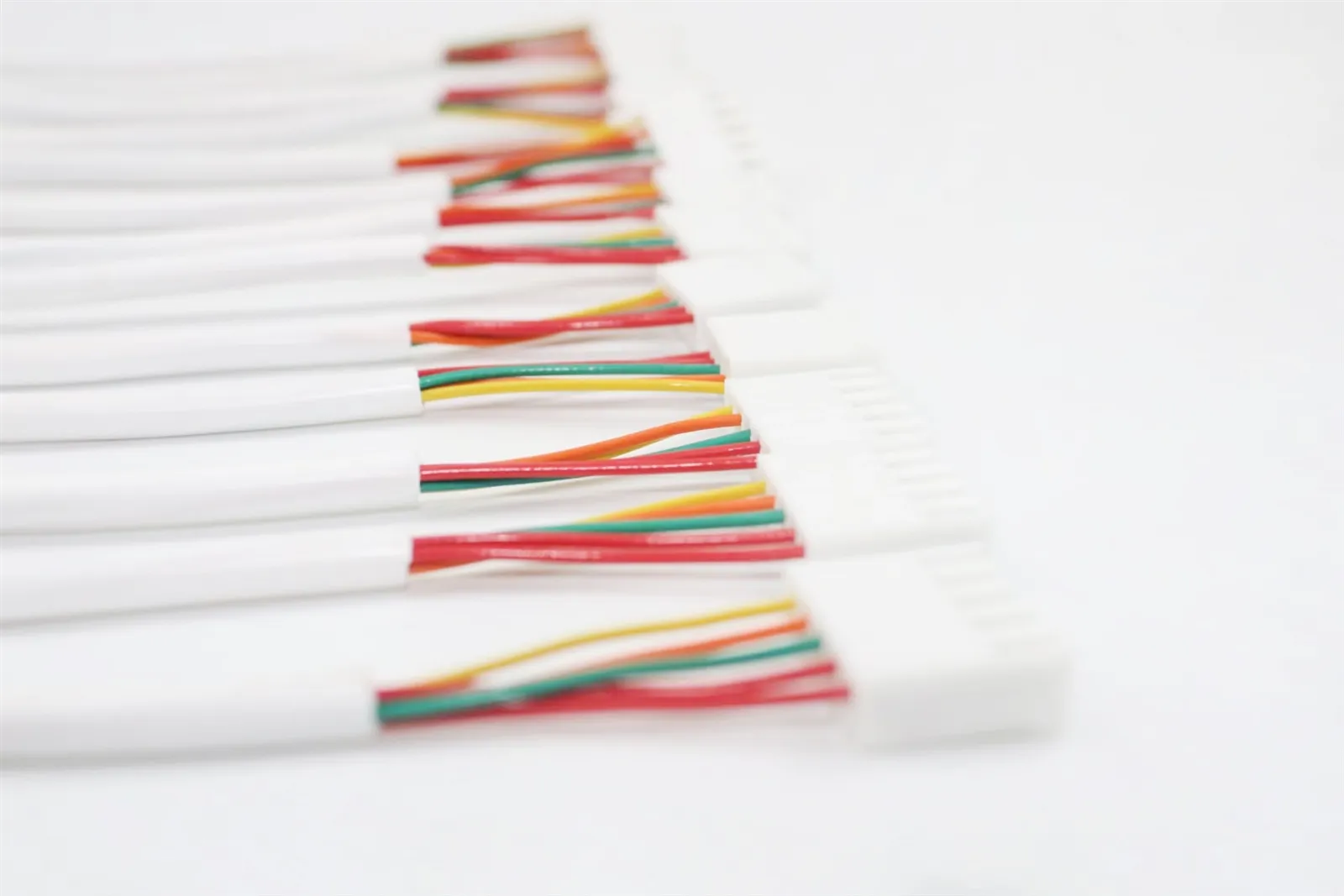


The wiring harness around the engine is an important component of the automotive electrical system, responsible for transmitting power and signals to ensure the normal operation of the engine and related components. The following are common wiring harnesses around the engine and their functions:
1.Sensor related wiring harness
(1)Crankshaft position sensor harness
①Function: Transmit crankshaft speed and position signals to the engine control unit (ECU) to determine ignition timing and fuel injection timing, ensuring normal ignition and fuel injection of the engine.
②Location: Usually connected to sensors near the crankshaft, close to the engine block.
(2)Camshaft position sensor harness
①Function: Feedback camshaft position signal, assist ECU in determining cylinder working sequence, and cooperate with crankshaft signal to achieve precise valve and fuel injection control.
②Location: Near the camshaft, such as above the cylinder head.
(3)Air flow meter/intake pressure sensor wiring harness
①Function: Measure the intake air quantity or intake pressure, transmit the signal to the ECU for calculating the fuel injection quantity, and ensure that the air-fuel ratio meets the operating requirements (such as idle, acceleration, and full load).
②Location: Connect sensors near the intake manifold or air filter.
(4)Water temperature sensor harness
①Function: Monitor the temperature of the engine coolant, transmit the signal to the ECU for adjusting the fuel injection quantity and idle speed (such as adding rich fuel injection during cold start), and control the start and stop of the cooling fan.
②Location: Connect the sensor to the cylinder head or coolant pipeline.
(5)Oxygen sensor wiring harness
①Function: To detect the oxygen content in the exhaust and provide feedback to the ECU to adjust the air-fuel ratio, achieve closed-loop control, reduce exhaust emissions, and improve fuel economy.
②Location: Installed on the exhaust pipe, divided into front oxygen sensor (before the catalyst) and rear oxygen sensor (after the catalyst).
2.Wiring harness related to actuators
(1)Cylinder connecter
①Function: Transmit control signals from the ECU, drive precise fuel injection from the injector, and control the fuel injection quantity and timing.
②Location: Connect the fuel injector to the engine harness and arrange it along the cylinder head or intake manifold.
(2)Ignition coil harness
①Function: Transmit the ignition signal of the ECU to the ignition coil, generate high-voltage electricity to ignite the spark plug, and ignite the mixture in the cylinder.
②Location: Connect the ignition coil to the distributor (or independent ignition coil), near the spark plug.
(3)Idle control valve harness
①Function: Control the opening of the idle control valve, adjust the intake air volume during idle, and maintain stable engine idle (such as idle compensation during cold vehicle idle and air conditioning on).
②Location: Connect the idle control valve to the vicinity of the throttle body.
(4)Carbon canister solenoid valve harness
①Function: Receive ECU signals, control the opening and closing of the carbon canister solenoid valve, introduce fuel vapor into the intake manifold for combustion, and reduce fuel evaporation pollution.
②Location: Location: Connect the carbon canister solenoid valve to the carbon canister pipeline inside the engine compartment.
3.Power and grounding harness
(1)Battery positive wire harness
①Function: It is led out from the positive terminal of the battery and provides the main power supply for electrical components around the engine, such as the starter, generator, ECU, etc.
②Features: Coarse wire diameter, capable of carrying high currents, with an insulated protective cover on the surface.
(2)Grounding wire harness
①Function: It is led out from the positive terminal of the battery and provides the main power supply for electrical components around the engine, such as the starter, generator, ECU, etc.
②Features: Coarse wire diameter, capable of carrying high currents, with an insulated protective cover on the surface.
4.Other auxiliary wiring harnesses
(1)Generator wiring harness
①Function: Connect the generator, battery, and vehicle circuit, transmit the electrical energy generated by the generator, charge the battery, and supply power to all electrical equipment in the vehicle.
②Location: Lead out from the generator and route along the engine compartment to the battery and fuse box.
(2)Starter wire harness
①Function: Transmit the high current of the battery to the starter, drive the starter to rotate, and start the engine.
②Features: The wire diameter is extremely thick (usually 16-25mm2) and can withstand instantaneous high currents (several hundred amperes).
(3)Cooling fan wiring harness
①Function: Control the start and stop of the cooling fan, adjust the fan speed (high/low) according to the water temperature sensor signal or air conditioning system requirements.
②Location: Connect the fan motor to the engine control module, located near the radiator.
(4)Throttle position sensor harness
①Function: Feedback the throttle opening signal to the ECU, which is used to determine the driver's acceleration intention, adjust the fuel injection quantity and ignition advance angle.
②Location: Connect the sensor on the throttle body, near the throttle valve.
(5)Common characteristics and design requirements of wire harnesses
①High temperature resistance and protection: The temperature around the engine is high, and the wiring harness is usually made of high temperature resistant insulation materials (such as silicone rubber, fluororubber), wrapped in fireproof corrugated pipes or metal sheaths to prevent high temperature aging or wear.
②Waterproof and dustproof: Use waterproof connectors at the interface to prevent rainwater and oil from entering and causing short circuits.
③Anti electromagnetic interference: Some sensor wiring harnesses (such as crankshaft and camshaft signals) use shielded wires to reduce the impact of electromagnetic interference on signals.



5.Summary
The engine peripheral wiring harness achieves coordinated control of engine combustion, ignition, fuel injection, heat dissipation and other systems through precise signal transmission and power supply. Their reliability directly affects the power, economy, and emission performance of the engine. Therefore, in automobile maintenance, the inspection of wiring harnesses (such as aging, poor contact, short circuit) is an important part of troubleshooting.