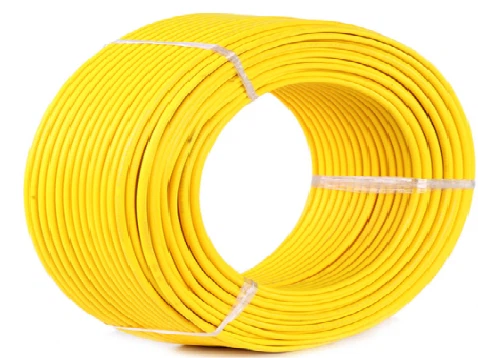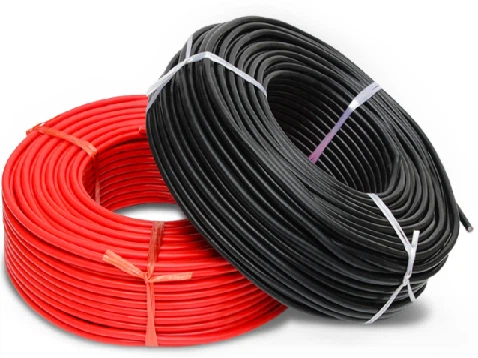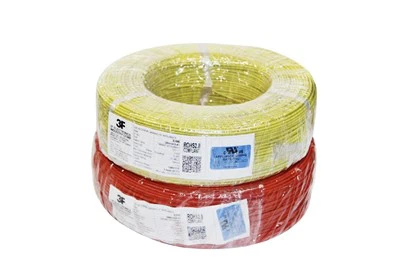

Polytetrafluoroethylene (TFE or PTFE), referred to as F-4, is insulated with polytetrafluoroethylene. It has the characteristics of wires and cables with various other insulating materials, and its excellent performance is unmatched by other wires and cables. Its wide frequency range and high and low temperature use range, excellent chemical stability, high electrical insulation performance, outstanding surface non-stickiness, good lubricity and atmospheric aging resistance make PTFE wire and cable in It plays an important role in solving industrial high technology, harsh use environment and very high safety performance. Polytetrafluoroethylene is a polymer with high crystallinity. 327C is the melting point of polytetrafluoroethylene. Above this temperature, the crystal structure disappears and turns into a transparent reshaped gel state. Its viscosity reaches as high as 360 degrees. 1010 Pa, but still can not flow, so this characteristic determines that the PTFE wire cannot be processed by general hot extrusion, but by a similar method of powder metallurgy combining pressure and sintering, which is also PTFE is difficult to process and has the disadvantages of low efficiency. PTFE insulated wire and cable is a kind of tough, soft, inelastic, moderate tensile strength, and excellent low temperature performance. When the temperature is as low as (-269C), PTFE still has ductility under impact. It has excellent electrical insulation properties in a wide temperature and frequency range. Its insulation resistance is very high, even if it is immersed in water for a long time, it does not change significantly, and it does not change much with temperature. The breakdown strength of the wire is very high, and the breakdown strength of the thin-walled wire can reach 200KV/mm.
certified product
UL、VDE、CSA
Application field
aviation
aerospace
Transformer
household appliances
Motor reference wire