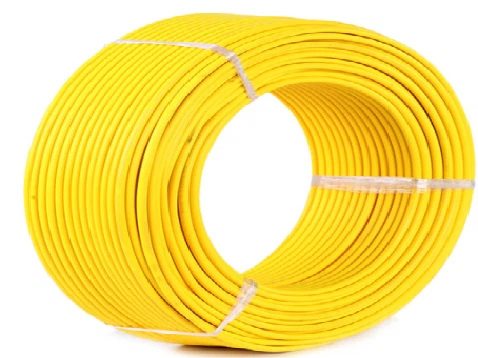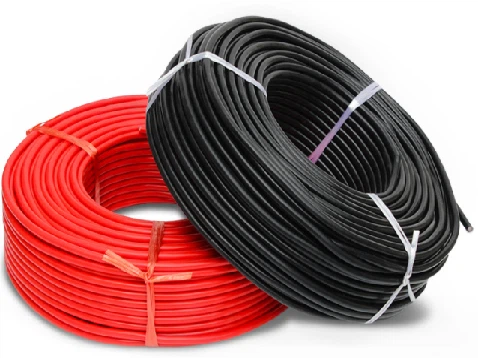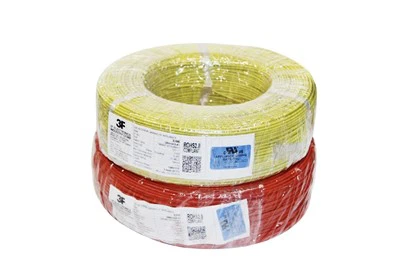

MIL-DTL-81044/12 military standard double-layer irradiated insulated electronic wire for 3F
Product Overview
MIL-DTL-81044/12 (81044D12) on 3F is a lightweight thin-walled double-layer insulated electronic wire that complies with the US military standard MIL-DTL-81044/12. It adopts a double-layer co extrusion irradiation structure of XLPO (irradiated cross-linked polyolefin) inner layer and XLPVDF (irradiated cross-linked polyvinylidene fluoride) outer layer, with a rated temperature of 150 ℃/600V, and a specification of 20AWG, 19 strand regular twisted tin plated copper conductor. This product meets the standards of "high temperature resistance+oil and solvent resistance+bending resistance+low smoke and halogen-free+thin-walled lightweight", making it a reliable choice for high-density internal wiring in harsh environments.
Structure and material characteristics
Conductor: 20AWG 19 strand regular twisted tin plated copper
Adopting a 19 strand regular twisted structure instead of a single solid conductor, it has good flexibility and strong anti vibration fatigue ability, suitable for frequent bending and high-density wiring occasions; The tin plating layer effectively prevents copper conductors from oxidation and blackening, and the contact resistance is stable under long-term high temperature environment. It has good soldering properties and is convenient for direct soldering and crimping of drive boards and power device terminals.
Inner layer: XLPO irradiated cross-linked polyolefin
After electron beam irradiation crosslinking, a three-dimensional network structure is formed, which has excellent and stable dielectric properties, high insulation resistance, and low dielectric loss; The material itself is low smoke and halogen-free, and does not release a large amount of toxic hydrogen halide gas or thick black smoke during combustion; After cross-linking, there is no melt flow, and even if there is a short-term local overheating, it will not soften or collapse like thermoplastic materials, while maintaining good bending resistance, providing a reliable electrical insulation foundation for the entire wire.
Outer layer: XLPVDF irradiated cross-linked polyvinylidene fluoride
As an outer sheath, cross-linked PVDF provides hard and tough mechanical protection and excellent chemical resistance: resistant to fuel, lubricants, refrigeration oil, refrigerants, and various solvents, resistant to UV aging, hydrolysis, wear and cutting, flame retardant, self extinguishing, and low smoke and low toxicity. Compared to fluorine materials such as PTFE, cross-linked PVDF has better cold flow resistance and is still easy to strip, print, and seal under thin-walled conditions, balancing the chemical stability of fluorine materials with the convenience of processing and assembly.
Double layer co extrusion irradiation process
After synchronous co extrusion of the inner and outer layers, the overall irradiation cross-linking is achieved, with a tight bond between the two layers and no risk of delamination, avoiding interface defects that may occur when extruding the inner layer first and then covering the outer layer; The thin-walled design significantly reduces the outer diameter and weight while meeting the 600V insulation level, making it particularly suitable for compact chassis interiors and high-density wire harness assembly.
Typical Applications
First typical (with the highest proportion of shipments): Internal wiring harness in the new energy power domain
This is the application direction with the largest shipment volume of the product, covering the internal wiring of power boards such as inverters, energy storage BMS, vehicle electronic control, heat pumps, servo drives, etc.
Applicable scenarios: 600V low-voltage power circuits, sampling lines, and internal connections between drive boards and power devices (IGBT/MOS, Hall sensors, temperature sensors). These locations are exposed to a high temperature environment of 150 ℃ for a long time, frequently in contact with media such as refrigeration oil, coolant, hydraulic oil, cleaning agents, etc. At the same time, the wiring space is narrow, the assembly process requires repeated bending, and the materials are required to be low smoke and halogen-free to meet the safety regulations inside the vehicle.
Advantage matching: The outer layer of XLPVDF effectively resists the erosion of fuel, lubricating oil, refrigerant, and various solvents, avoiding the swelling, cracking, and hardening of ordinary insulation layers in oil; The inner XLPO provides stable and reliable dielectric performance, ensuring the insulation safety of the sampling signal and power circuit; Tin plated conductors are resistant to oxidation, and their contact resistance does not drift under long-term high temperatures. The overall structure is very suitable for wiring needs that require long-term exposure to high temperature and enclosed computer cases.
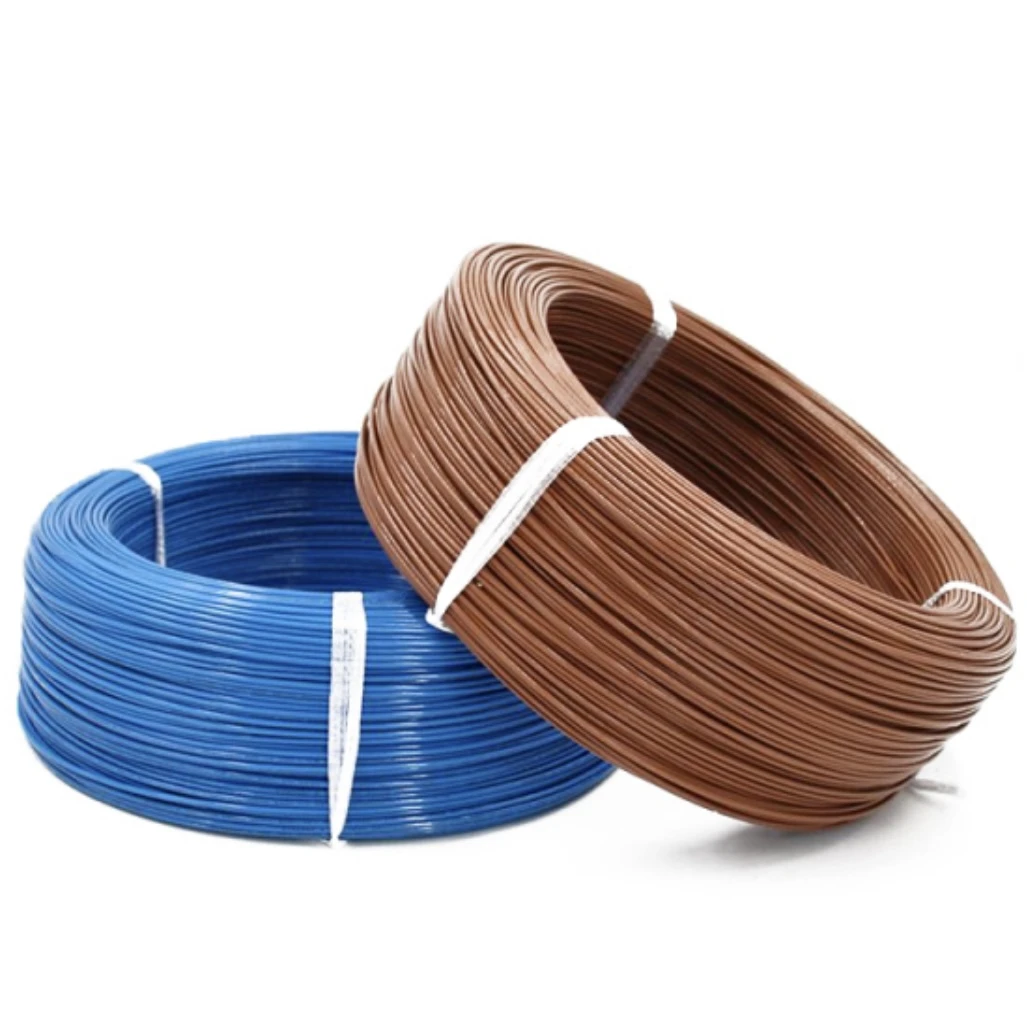
Second typical: Industrial high-temperature equipment, motor/servo lead wires, laser equipment, internal wiring of power modules
Suitable for internal wiring of high-temperature control cabinets, high-frequency transformers, toroidal transformers, high-power power supplies, heating equipment, and wiring inside industrial chambers with oil, dust, and chemical splashes. This type of scenario has high temperature, complex medium, and long maintenance cycle. Ordinary PVC or single-layer cross-linked wires are prone to aging and cracking, while silicone rubber wires are prone to oil absorption and softening. However, the double wall cross-linked structure of this product complements each other in terms of temperature resistance, oil resistance, and wear resistance, significantly extending its service life.
Third typical: stringent wiring harnesses in aircraft, drones, special equipment, and rail transit onboard cabins
Suitable for harsh wiring harness applications with extremely high reliability requirements, such as aviation onboard, unmanned aerial vehicles, special equipment, and rail transit onboard cabins. It is also widely used for export matching of Japanese equipment and overseas industrial equipment. The product has military standard bloodline and can meet environmental testing requirements such as fluid, wear, flame, and low temperature; The thin-walled and lightweight characteristics make it particularly suitable for high-density wire harness assembly, and many Japanese customers and industrial equipment manufacturers directly use it for dense wiring in compact spaces.
Selection and usage suggestions
BOM writing: Qifu Rui M81044/12-20-TIN-XXX, 20AWG, 19 strand tinned copper, XLPO+XLPVDF double-layer irradiation, 150 ℃ 600V, color XXX, in compliance with MIL-DTL-81044/12/SAE AS81044/12.
Wire stripping: The outer layer of PVDF is relatively hard and tough, so it is necessary to use a wire stripping tool with a suitable cutting edge to avoid cutting the inner layer of XLPO.
Welding: Tin plated copper is easy to tin, and the insulation layer is resistant to high temperatures and does not melt. However, it is still recommended to control the temperature and contact time of the soldering iron to protect the devices around the terminals.
Positioning description: The 600V level is suitable for low-voltage power circuits and sampling lines, and does not replace the high-voltage main line of the battery pack; This structure is a single core unshielded structure. If there are EMC requirements, additional braided shielding or shielded wire harness solutions need to be used.