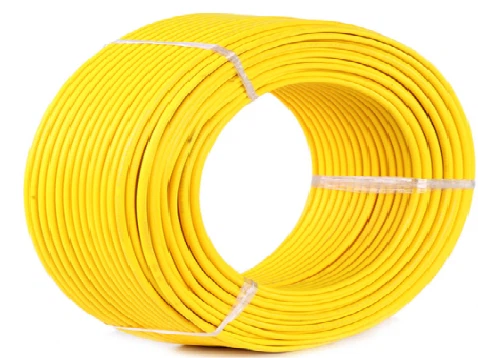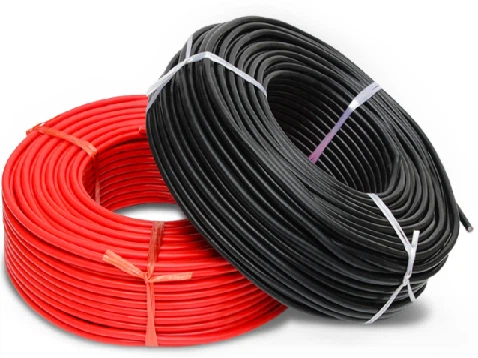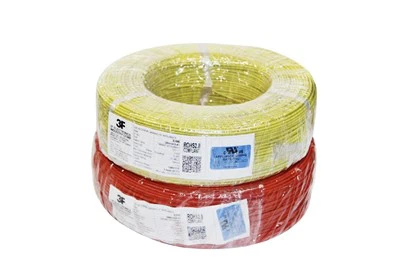

3F silicone wire silicone braided wire adopts a new method of platinum vulcanization technology, aiming to make the quality more stable, the material more pure and environmentally friendly, and the performance of silicone insulation material perfect.
Platinum vulcanization (platinum catalyzed addition vulcanization) is the preferred process for high-end wire and cable insulation and silicone sleeves. Compared with traditional double 24 and double 25 peroxide vulcanization, it has outstanding advantages in four dimensions: electrical, physical, environmental protection, and processing.
Significant improvement in electrical insulation performance (cable insulation is the most critical)
1. No small molecule volatiles, stable insulation resistance
2. Peroxide vulcanization will decompose to produce small molecules such as acetophenone and tert butanol, which slowly precipitate when used at high temperatures and migrate to the surface of the insulation layer to form conductive impurities, reducing insulation resistance and making it prone to leakage. Platinum sulfide has no cracking by-products and minimal insulation resistance attenuation under long-term high temperature, making it suitable for high-voltage, high-frequency, and precision signal cables.
3. Low dielectric loss and high frequency resistance
4. Non polarized small molecule residue, low heat generation in high-frequency environments, suitable for RF wires, high-temperature sensor wires, and aerospace special insulation wires.
5. Better resistance to corona discharge and leakage tracing
6. There are no migratory ion impurities inside, and long-term high-voltage operation is not prone to electrical corrosion and aging, extending the service life of the cable.
Advantages in physics and temperature resistance performance
Ultra high heat resistance, higher temperature for long-term use
Platinum sulfide silicone cross-linking structure is pure and stable, with continuous use temperature up to 200-250 ℃ and short-term instantaneous temperature resistance of 300 ℃; Ordinary peroxides can only be cured at 180 ℃ for a long time.
No frost spray, no precipitation
The decomposition residue of peroxide vulcanizing agent is prone to frosting, and the surface of silicone gel appears white and sticky; Platinum sulfide has no precipitation, and the surface of the insulation layer is clean and smooth, without contaminating terminals, connectors, and PCB boards.


Balanced mechanical properties and aging resistance
Uniform cross-linking, higher tensile strength and tear strength; Heat resistant oxygen aging, UV aging, long-term high temperature does not harden or crack, and the insulation layer is not easily brittle or damaged.
Extremely low compression permanent deformation
After long-term high temperature compression, it rebounds well and is used for sealing insulation sheaths and wire harness through-hole insulation, making it less prone to gap leakage and insulation failure.
Environmentally friendly, low odor, food and medical grade compliance
Almost odorless
Peroxide vulcanized products have a strong and pungent chemical odor, while platinum vulcanized products are odorless and suitable for insulation of internal wiring harnesses in household appliances, food equipment, and medical devices.
Low VOC, no toxic decomposition products
The addition reaction produces no volatile organic by-products and has passed ROHS, REACH, FDA food contact, and medical biocompatibility certifications. It can be used for insulation of medical wires and drinking water equipment.
Non corrosive metal conductor
The decomposition products of peroxides are weakly acidic, and long-term high temperatures can corrode copper conductors
Advantages of Processing and Production Adaptation (Cable Extrusion Insulation)
Fast vulcanization speed and high production efficiency
The cross-linking rate in high-temperature tunnel furnaces is much faster than that of peroxides, and the extrusion line speed can be significantly increased, reducing production costs.
Thin skin extrusion, uniform thickness of insulation layer
Cross link controllable, no foaming tendency, suitable for extremely fine high-temperature wires and thin-walled insulated cables (such as aviation fine wires and 32AWG ultra-fine wires), without pinholes or bubbles causing insulation breakdown.
Simplify or even omit secondary vulcanization
Peroxide silica gel must be baked twice for a long time to remove small molecules; Platinum sulfide has minimal impurities after a single vulcanization, allowing for a short period of secondary drying or no need for secondary vulcanization, saving energy consumption and labor hours.
Does not affect subsequent bonding and printing
There are no precipitates on the surface, and the insulation outer layer can be directly printed and bonded with heat shrink tubing. The adhesion is stable and there will be no problems of lettering or debonding.
Summary of Platinum Advantages Compared to Traditional Peroxide Sulfurization Shortcomings
| Performance dimension | Platinum sulfide | Peroxide vulcanization (bis (2,4)/bis (25)) |
| Odor | Odorless and low VOC | Stinky odor, high volatility |
| Insulation stability | Long term high insulation and low dielectric loss | Impurities precipitate at high temperature, and insulation continues to decline |
| Corrosion of conductors | Non-corrosive | Acid residue corrodes copper and silver plated conductors |
| Surface state | Smooth and frost free | Easy to turn white, spray frost, and sticky |
| Temperature resistance and aging | Long term stability at 200~250℃ | Up to 180℃, prone to long-term hardening and cracking |
| Eco-Certification | FDA, Medical grade is acceptable | Most cannot meet the requirements for food and medical contact |
| Permanent compression deformation | Excellent | Poor |
Applicable scenarios (silicone insulated wire): High temperature electronic wires, aerospace cables, new energy wire harnesses, medical equipment wires, internal wiring of food machinery, RF high-frequency insulated wires, thin-walled ultra-fine special insulated cables.